
Last updated September 23, 2026
Free visual inspection and a written scope of work before any mitigation begins - photos, moisture readings, and drying logs go in your claim file
The scope we write is the scope we bill. Anything new gets shown to you, in writing, before we touch it.
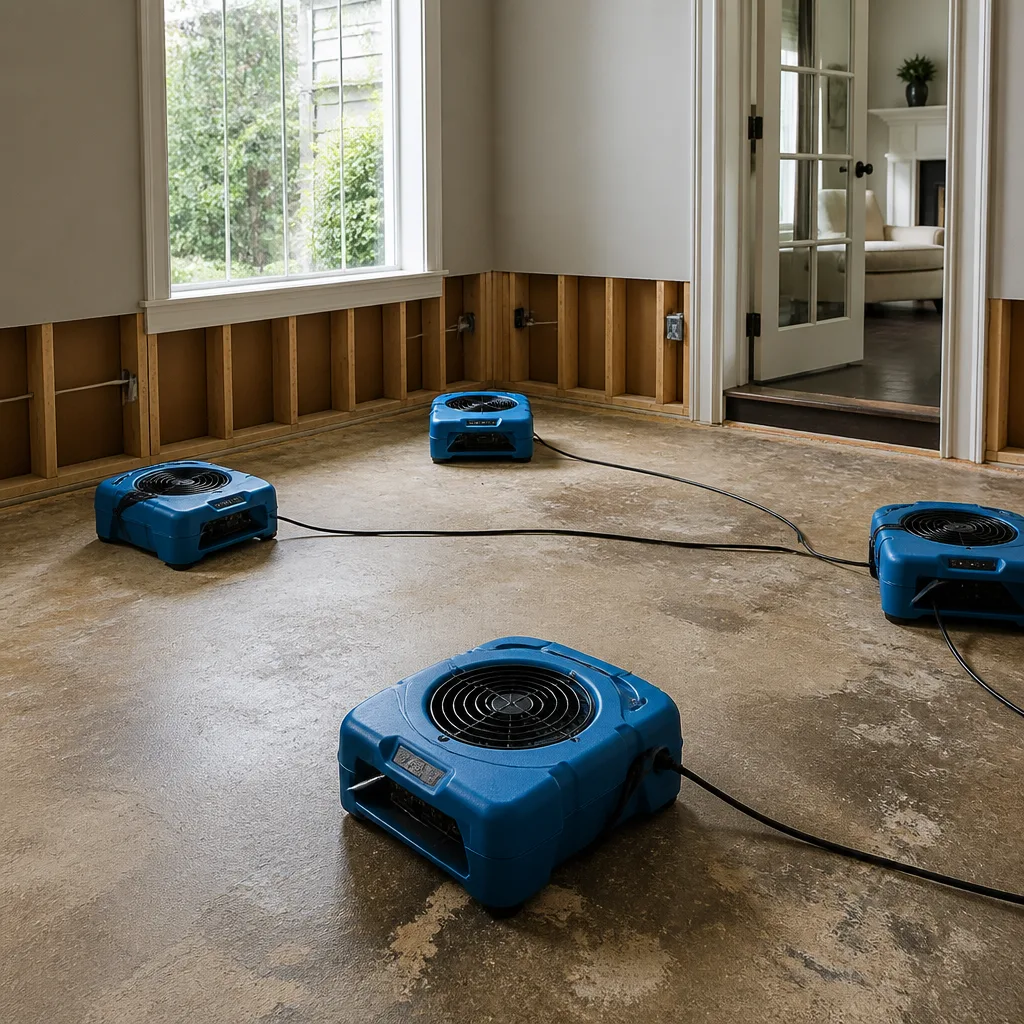

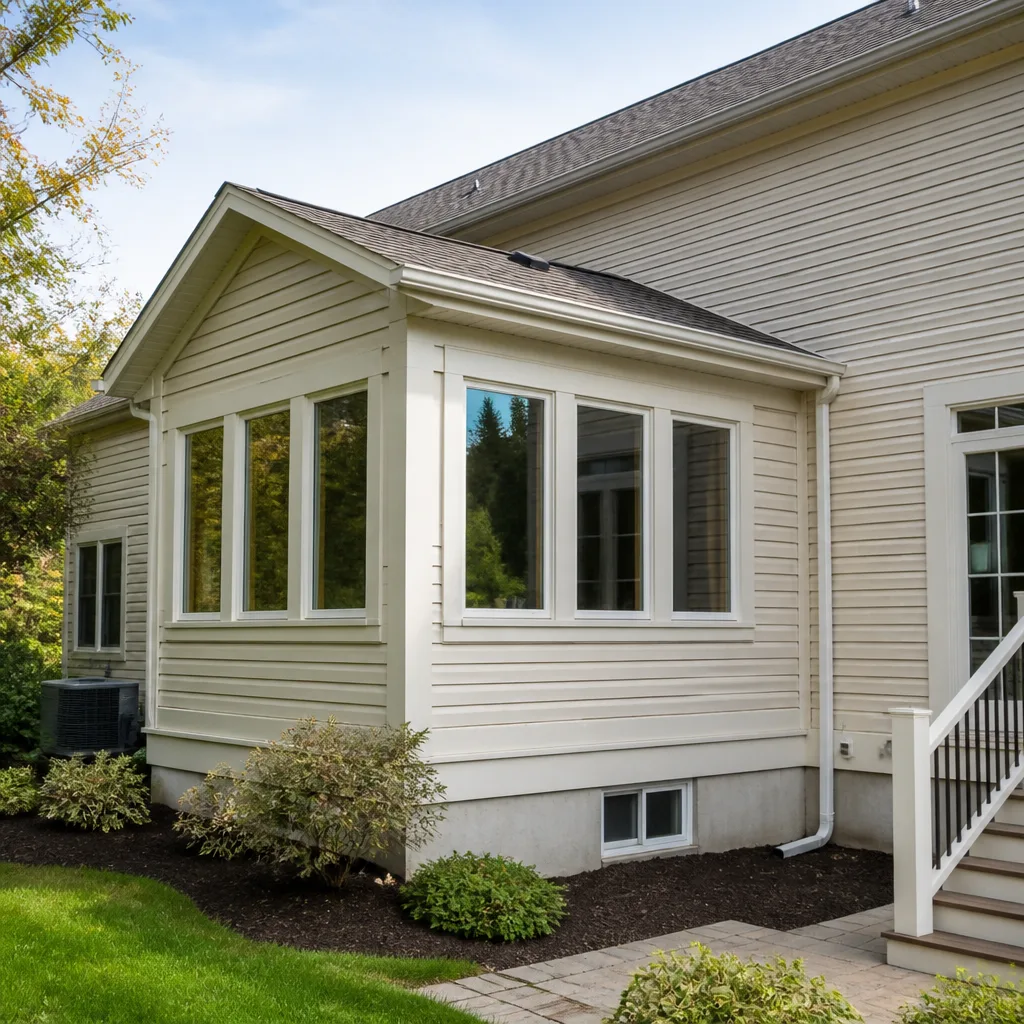
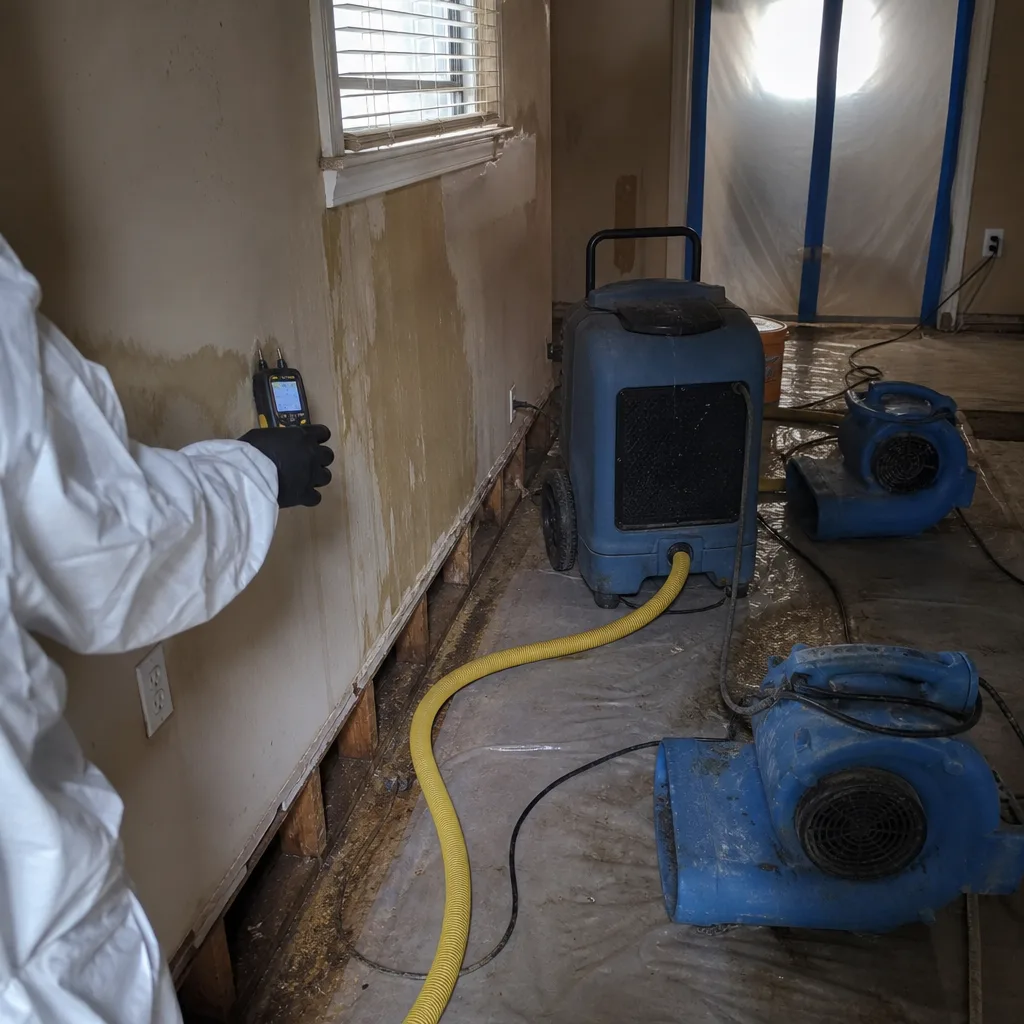 Before
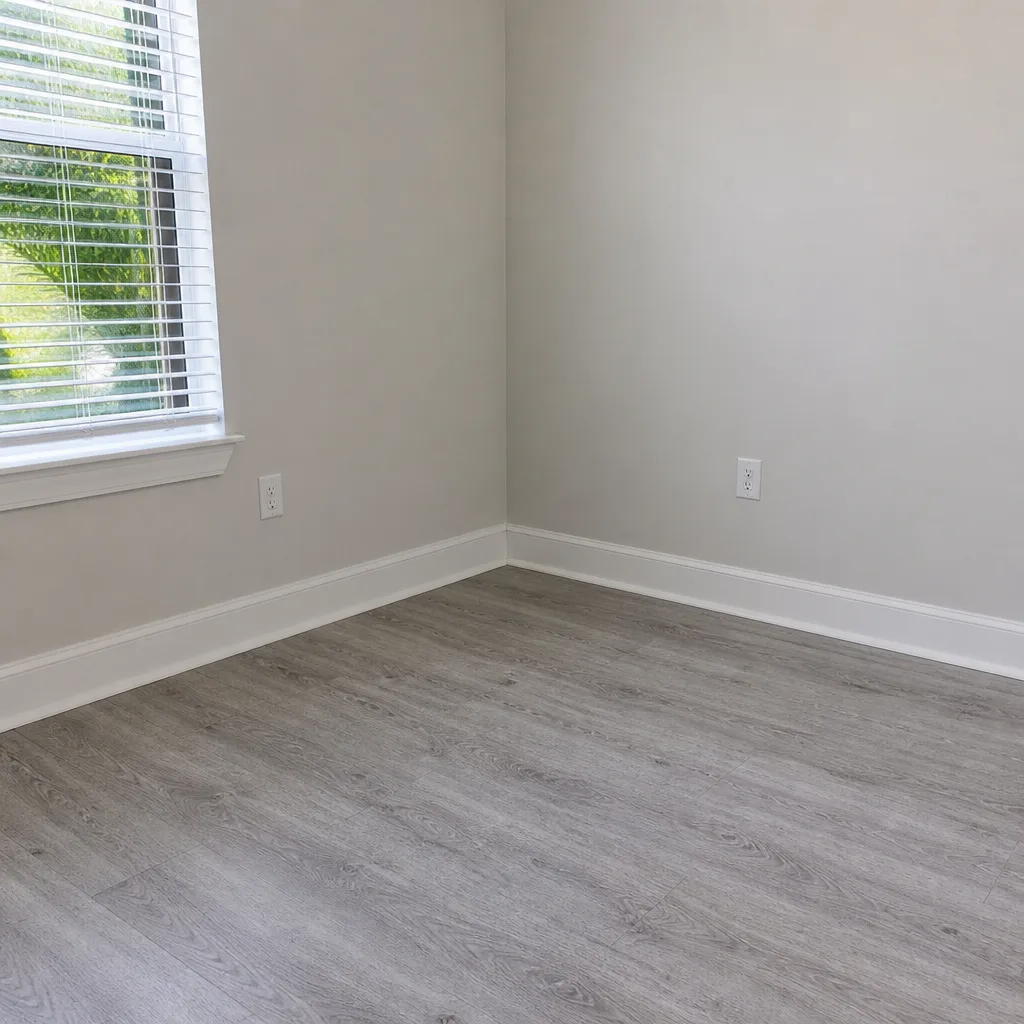 After
After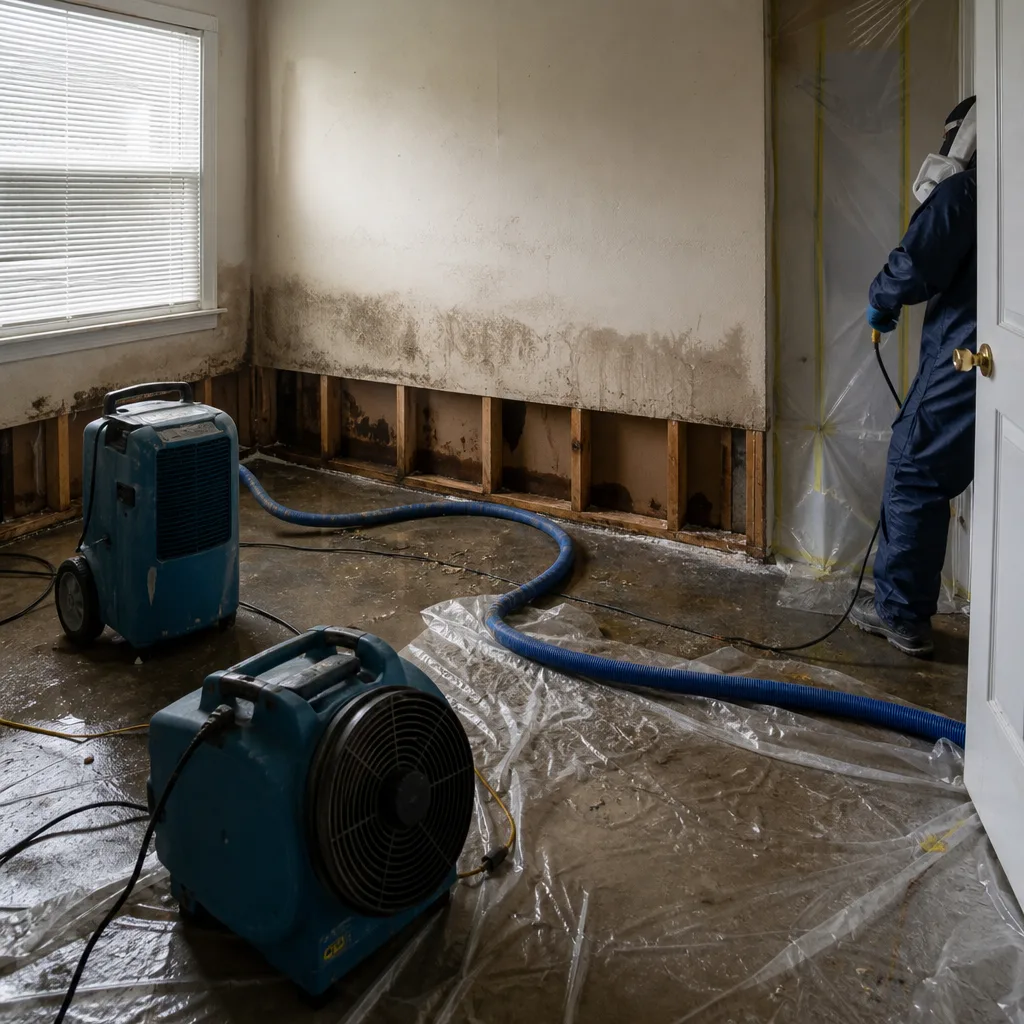 Before
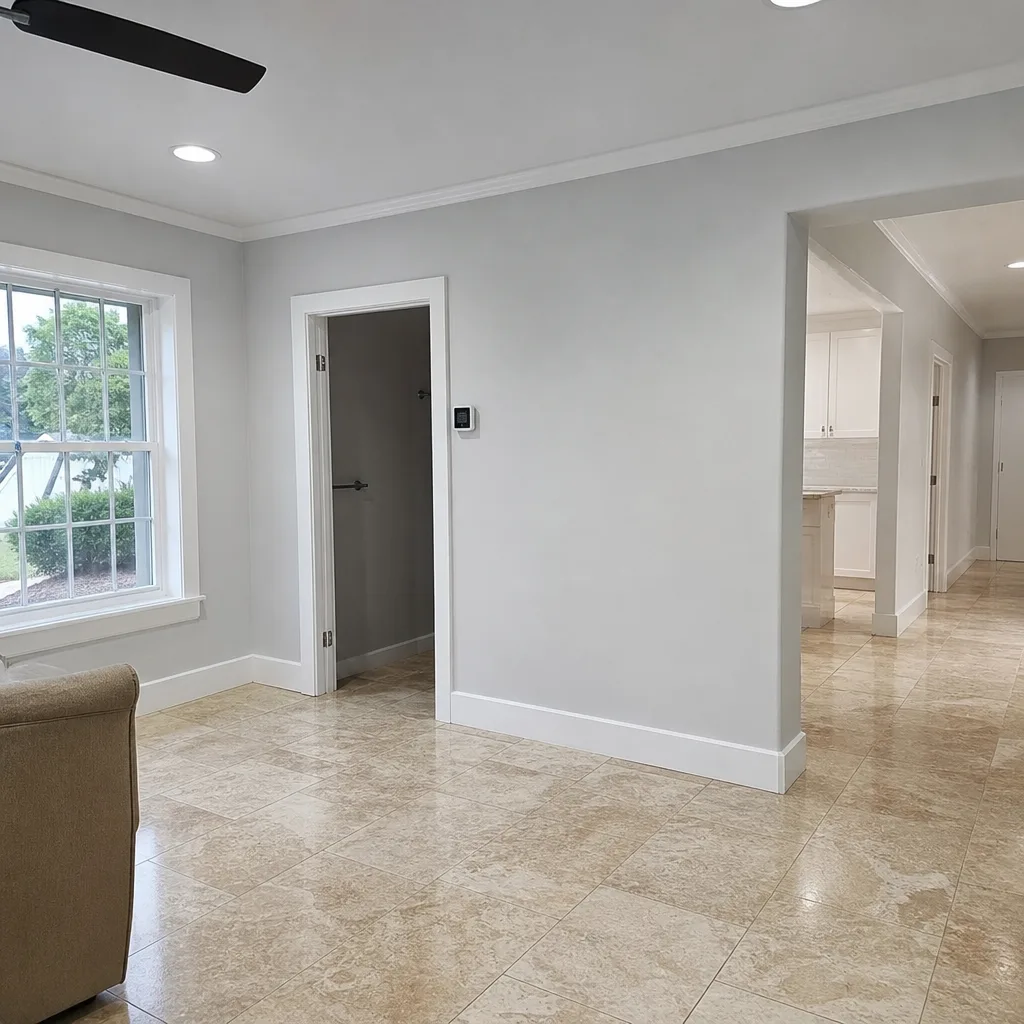 After
After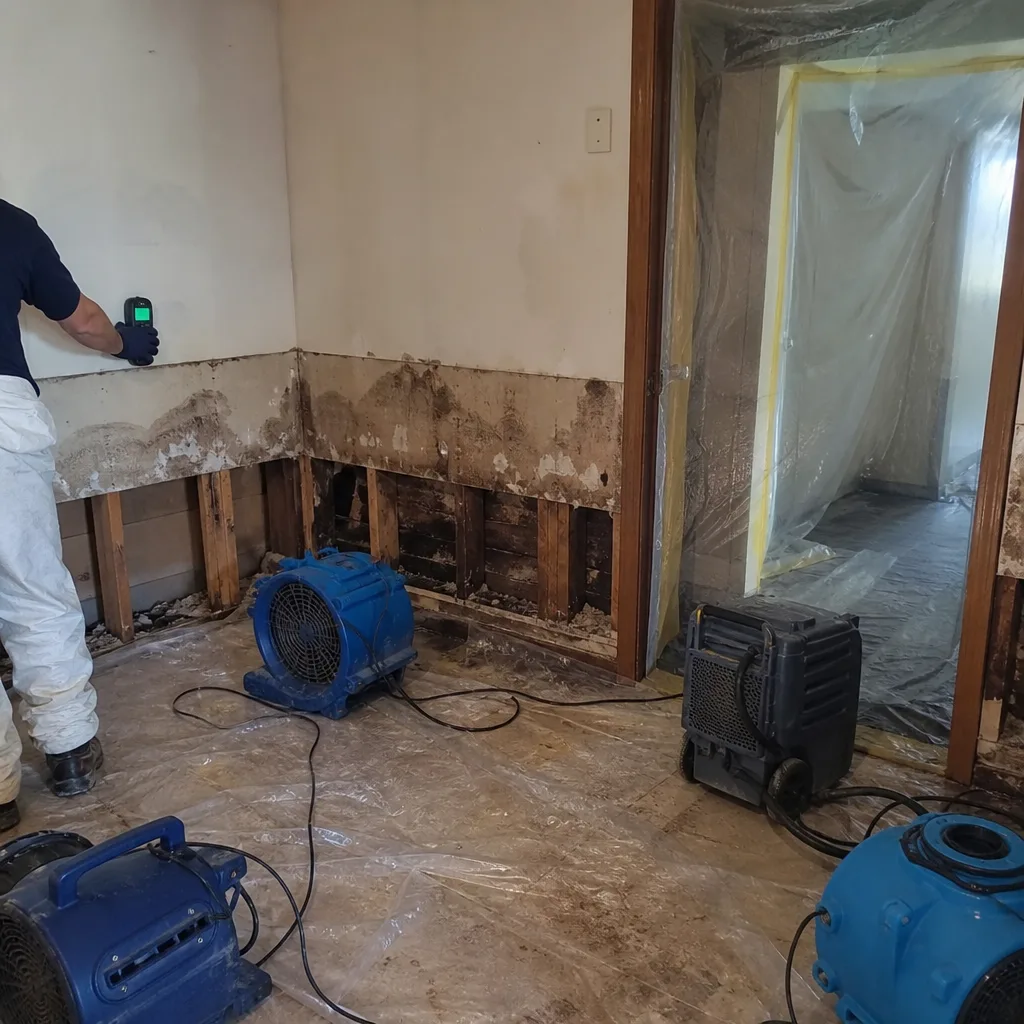 Before
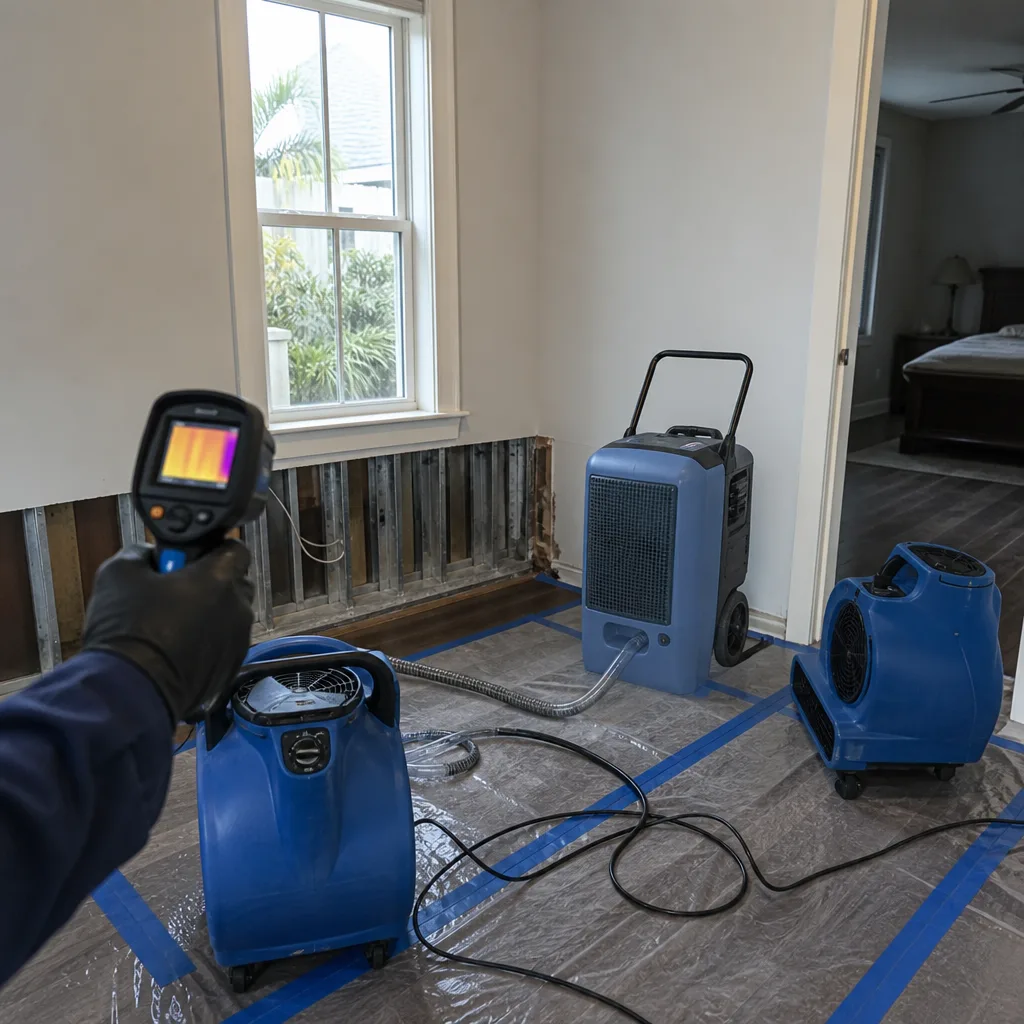 After
AfterWater Damage Restoration Maintenance Checklist for Boynton Beach Homeowners
A Boynton Beach homeowner whose water damage was remediated two years ago may have no idea whether the remediation held. No one told them that restored materials can re-wet silently behind walls in South Florida’s humidity, or that the 90-day and 12-month checkpoints are the only way to catch it before a buyer’s inspector does. In our experience across more than 12,000 homes since 2011, the restoration that fails is rarely the one that was done poorly - it’s the one that was never verified. Our Water Damage Restoration services inform this guide, which gives you measurable verification steps, not general home-care advice. You’ll learn the three moisture reading checkpoints, how to read your walls for hidden problems, what belongs in your restoration file, and how to document your own inspections so a future insurer cannot argue that new damage predates the original repair.
Quick Answer
A proper water damage restoration maintenance checklist for Boynton Beach homeowners - detailed in The Complete Guide to Damage Restoration in Boynton Beach - centers on three documented moisture checkpoints at 30 days, 90 days, and 12 months after remediation, with relative humidity kept below 60% and wood structural moisture content below 16% in South Florida’s year-round humid climate. You’ll also maintain a complete restoration file with original drying logs and moisture maps, perform annual visual inspections of previously affected wall cavities, and keep your HVAC and dehumidification systems on strict service intervals matched to local humidity loads. The goal is not preventing the next flood - it’s preserving the evidence that the last one was fixed correctly.
Table of Contents
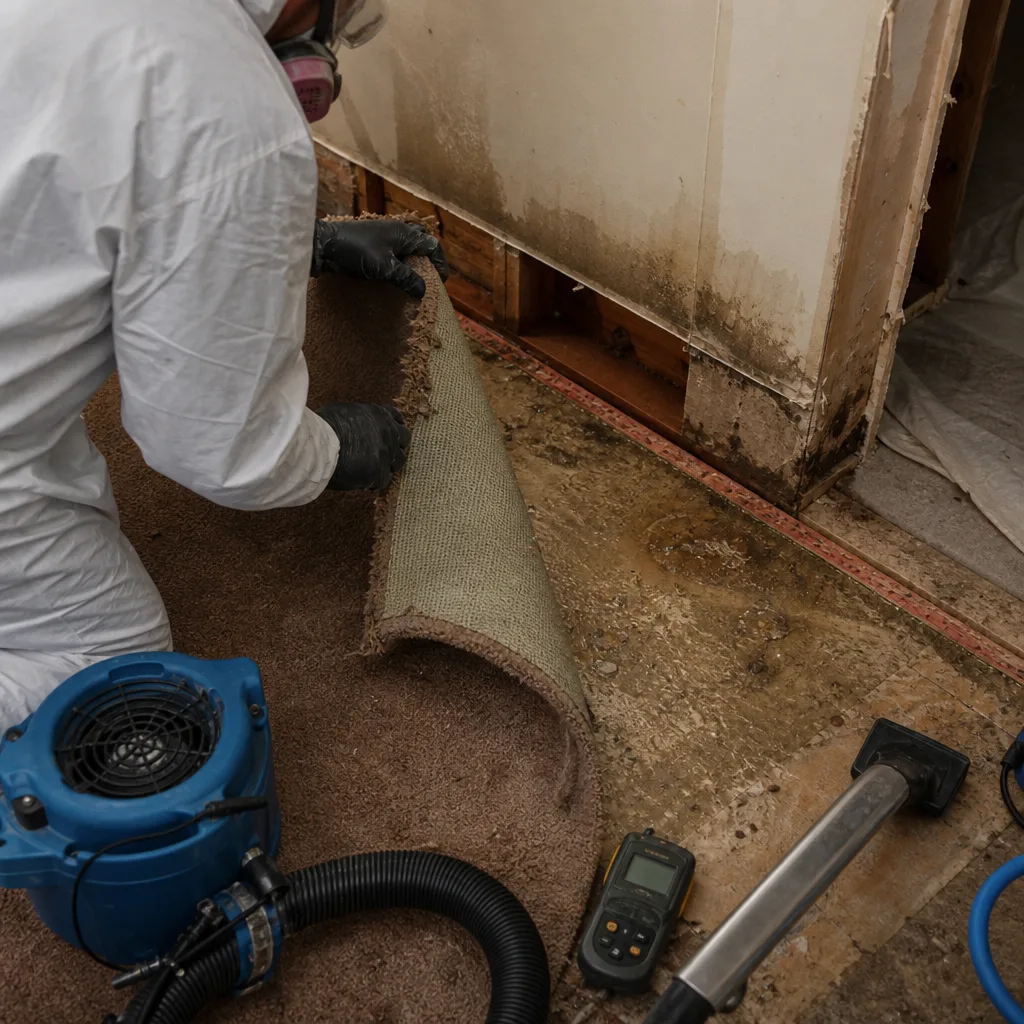
- The Three Moisture Checkpoints Every Restored Area Needs
- How to Visually Inspect a Previously Restored Wall Cavity
- HVAC and Dehumidifier Maintenance for Restored Areas
- What to Keep in Your Home Restoration File
- Documenting Your Annual Inspection with Dated Photos
- Why Boynton Beach’s Climate Changes the Math
- Common Mistakes to Avoid
- When to Call a Professional
- Frequently Asked Questions
 Before
 After
AfterThe Three Moisture Checkpoints Every Restored Area Needs
Restoration ends when the equipment leaves, but verification continues. We document every job to IICRC S500 standards, and the drying logs we produce are only useful if someone checks them against reality later. Here are the three checkpoints, with the specific thresholds that matter in Boynton Beach’s climate.
30-Day Checkpoint: Confirm the Dry-Down Held
At 30 days, you’re confirming that the final moisture readings your restoration company recorded haven’t reversed. In Boynton Beach, where outdoor relative humidity routinely sits at 70-85%, even a small envelope breach can push previously dry materials back above threshold.
What to measure:
- Relative humidity (RH) in the restored room: should remain below 60%. Above this, mold spores that survived remediation can activate.
- Wood structural moisture content (MC): should remain below 16% for dimensional lumber, below 12% for hardwood flooring. We use pin-type meters on baseplate lumber and non-invasive scanners on finished surfaces.
- Drywall moisture content: should remain below 1% above baseline for that home’s interior. Baseline varies by season; your original drying log should note it.
How to measure: A basic pinless moisture meter costs $40-80 and suffices for homeowner monitoring. For the 30-day check, compare your reading to the final moisture map in your restoration file. If any reading exceeds the original dry standard by more than 2 percentage points, that’s a flag.
90-Day Checkpoint: Catch Seasonal Stress
The 90-day checkpoint in Boynton Beach often coincides with the start of wet season in late May or early June. This is when your HVAC system transitions from heating to heavy cooling load, and when condensation risks peak.
What to measure:
- Same RH and MC readings as 30-day, plus vapor pressure differential between the restored cavity and adjacent rooms. A difference greater than 0.3 inches of mercury suggests trapped moisture or air leakage into the wall assembly.
- Thermal imaging if available: look for temperature differentials of 2°F or more on previously affected surfaces. Cold spots indicate evaporative cooling from hidden moisture.
What the numbers mean: A 90-day reading that has crept up but not crossed threshold tells you your systems are working at capacity. A reading that has crossed threshold means the original remediation missed something, or a new water source has appeared. Either way, this is the last checkpoint before concealed damage becomes structural.
12-Month Checkpoint: The Resale and Reinsurance Checkpoint
At 12 months, you’re documenting condition for three possible audiences: your own long-term maintenance records, a future buyer’s inspector, and a potential subsequent insurance claim. In Boynton Beach’s real estate market, where homes from 2015-2025 construction vintage trade frequently, this documentation directly affects sale price and transaction speed.
What to measure:
- Full moisture profile matching original drying log format: RH, MC at all original probe points, new baseline readings for comparison.
- Photographic documentation of all previously affected surfaces, with dated reference shots.
- HVAC service records showing dehumidification capacity and filter changes.
Acceptable thresholds at 12 months: RH below 60%, wood MC below 16%, no delta greater than 2% from original dry standard. If your readings meet these, you have documented proof that the restoration held. If they don’t, you have documented proof that something failed - which is equally valuable for warranty claims and insurance disputes.
How to Visually Inspect a Previously Restored Wall Cavity
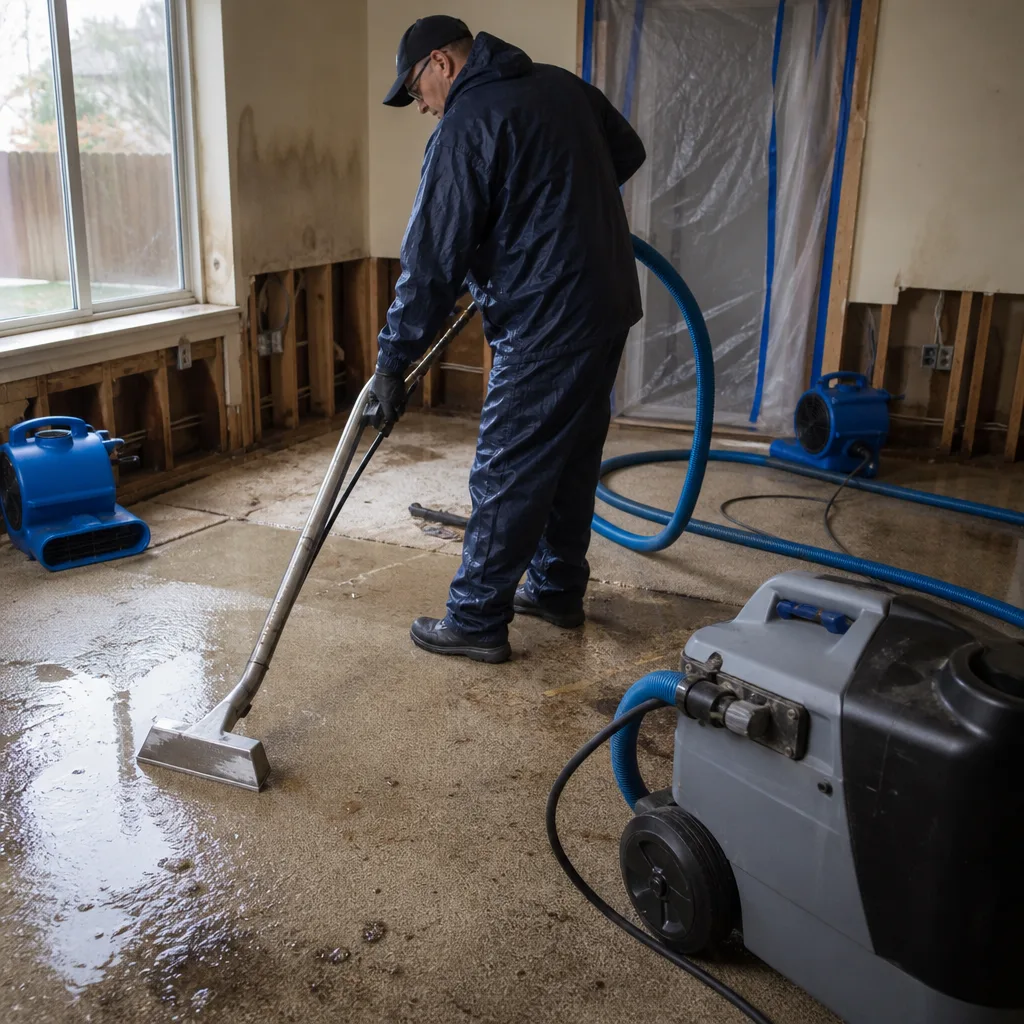
You don’t need to cut holes to read a wall. In our work across Boynton Beach neighborhoods from Canyon Isles to Quantum Park, we’ve learned what visible indicators reveal hidden conditions. These inspections work best when performed quarterly, with the 30-90-365 moisture checkpoints.
Paint Behavior: The Wall’s Diary
Paint doesn’t lie about what’s underneath, but you have to know the language. Look for:
- Blistering or bubbling in previously repainted areas: indicates moisture pushing through from behind. In Boynton Beach’s humidity, latex paint can re-soften if substrate moisture exceeds 15%.
- Chalky residue on dark paint colors: often misidentified as sun damage, but in restored areas it’s frequently efflorescence from residual moisture carrying salts to the surface.
- Color shift at repair boundaries: the line where new paint meets old should remain stable. If the new area darkens relative to old, moisture is migrating through the repair.
Baseboard Gaps: The First Mechanical Failure
Baseboards are moisture meters you can see. Wood trim in restored areas will telegraph subfloor and wall plate conditions:
- Gap opening at floor: baseboard pulls away from flooring as underlying material swells, then shrinks unevenly. A gap wider than 1/16 inch that wasn’t present at restoration completion is a flag.
- Caulk line failure: the bead where baseboard meets wall should remain intact. Recurring cracks in the same spot suggest movement from cyclical moisture, not settling.
- Nail pop or fastener rust: in coastal Boynton Beach, fastener corrosion accelerates with moisture. Rust stains on painted baseboard mean elevated humidity behind the surface.
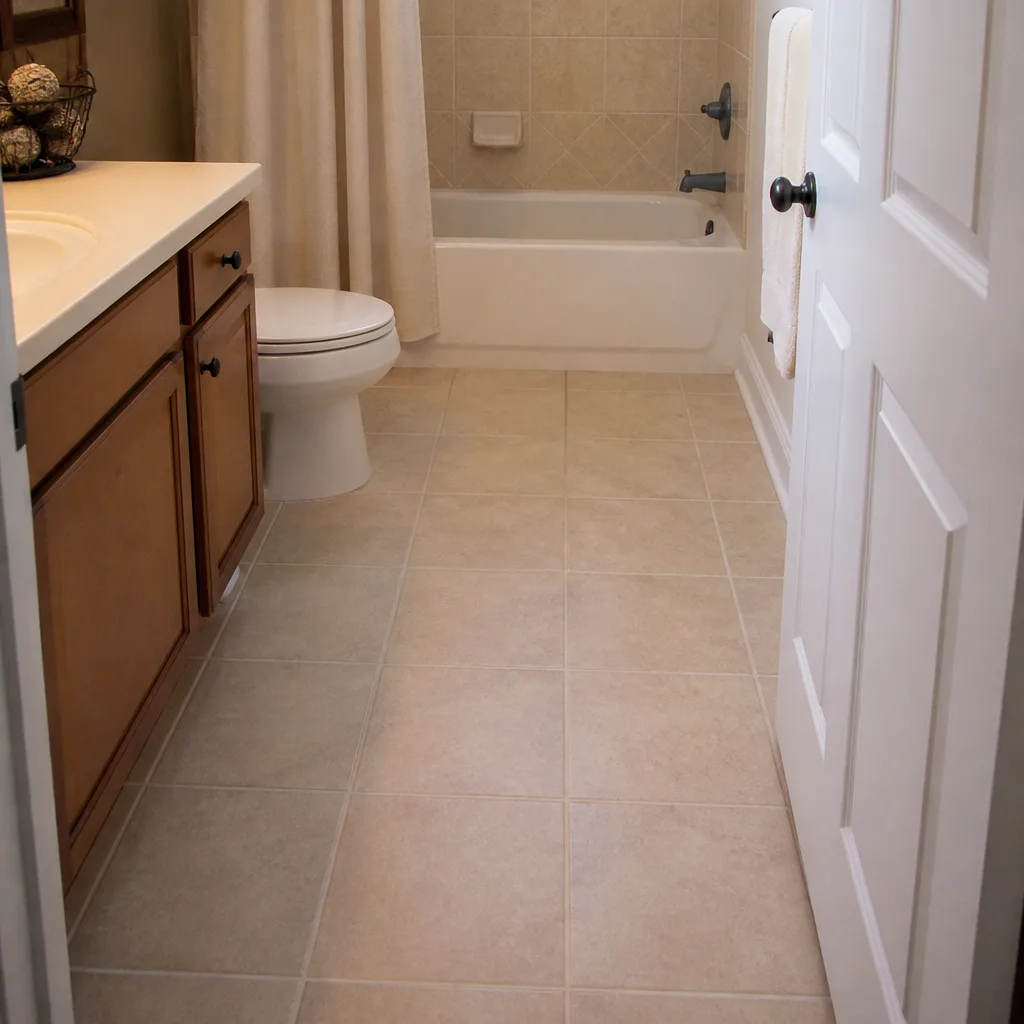
Grout Line Changes in Adjacent Flooring
Tile floors near restored walls are early warning systems. In our documentation for jobs near the Intracoastal and in eastern Boynton Beach where water tables run high, we specifically note grout condition:
- Grout darkening: even slight color change in previously uniform grout indicates moisture wicking through substrate.
- Grout powdering or crumbling: moisture migration dissolves grout from behind, causing surface failure before tile loosens.
- Tile lippage change: if tiles that were flat at restoration now show height variation, the underlayment has absorbed moisture and expanded differentially.
What to do with what you see: Photograph any change, date it, and compare to your restoration file photos. If two or more indicators appear together, schedule professional moisture mapping before the next checkpoint.
HVAC and Dehumidifier Maintenance for Restored Areas
In Boynton Beach, your air conditioner is a dehumidifier that happens to cool. For restored areas, its maintenance schedule needs to be tighter than the manufacturer’s generic recommendation because the local humidity load is higher than the national average by 15-20 annual inches of equivalent water removal.
HVAC Service Intervals for Restored Spaces
- Filter replacement: every 30 days during wet season (May-October), every 60 days during dry season. Not when the filter looks dirty - on the calendar. A loaded filter reduces airflow across the evaporator coil, raising the coil temperature and reducing moisture removal. In a restored area, that 10-15% efficiency loss can push RH above 60%.
- Coil cleaning: every 6 months, with photos. The evaporator coil in Boynton Beach accumulates biofilm faster than inland climates. Biofilm insulates the coil, reducing heat transfer and moisture condensation. Ask your HVAC technician to photograph the coil condition; this becomes part of your restoration file.
- Condensate line clearing and trap inspection: every 3 months. A backed-up condensate line in summer can dump gallons of water into a restored area before you notice. We have documented secondary damage in Boynton Beach homes where the primary restoration was sound but the HVAC condensate line failed 8 months later.
- Duct inspection at restoration boundaries: annually. Supply ducts passing through previously wet wall cavities can sweat if insulation is compromised. Look for rust spots on ductwork, water stains on ceiling below duct runs, and reduced airflow at registers in restored rooms.
Standalone Dehumidifier Protocol
If your restoration included a permanent dehumidifier installation, or if you’ve added one for protection:
- Set point: 55% RH, not 60%. The 5-degree buffer accounts for sensor inaccuracy and the rapid humidity spikes that follow afternoon thunderstorms in Boynton Beach.
- Drain line: inspect monthly for algae and kinks. Pump-style dehumidifiers common in crawl spaces and garages fail silently when drain lines clog.
- Coil and filter: clean every 60 days. Same biofilm issue as HVAC coils, but dehumidifier coils run colder and accumulate faster.
- Capacity verification: annually. Dehumidifier capacity ratings assume 80°F, 60% RH conditions. Boynton Beach averages higher. A 70-pint unit may functionally be a 50-pint unit here. If your restored area exceeds 1,000 square feet or has high ceilings, verify actual removal rate with a hygrometer log over 48 hours.
What to Keep in Your Home Restoration File
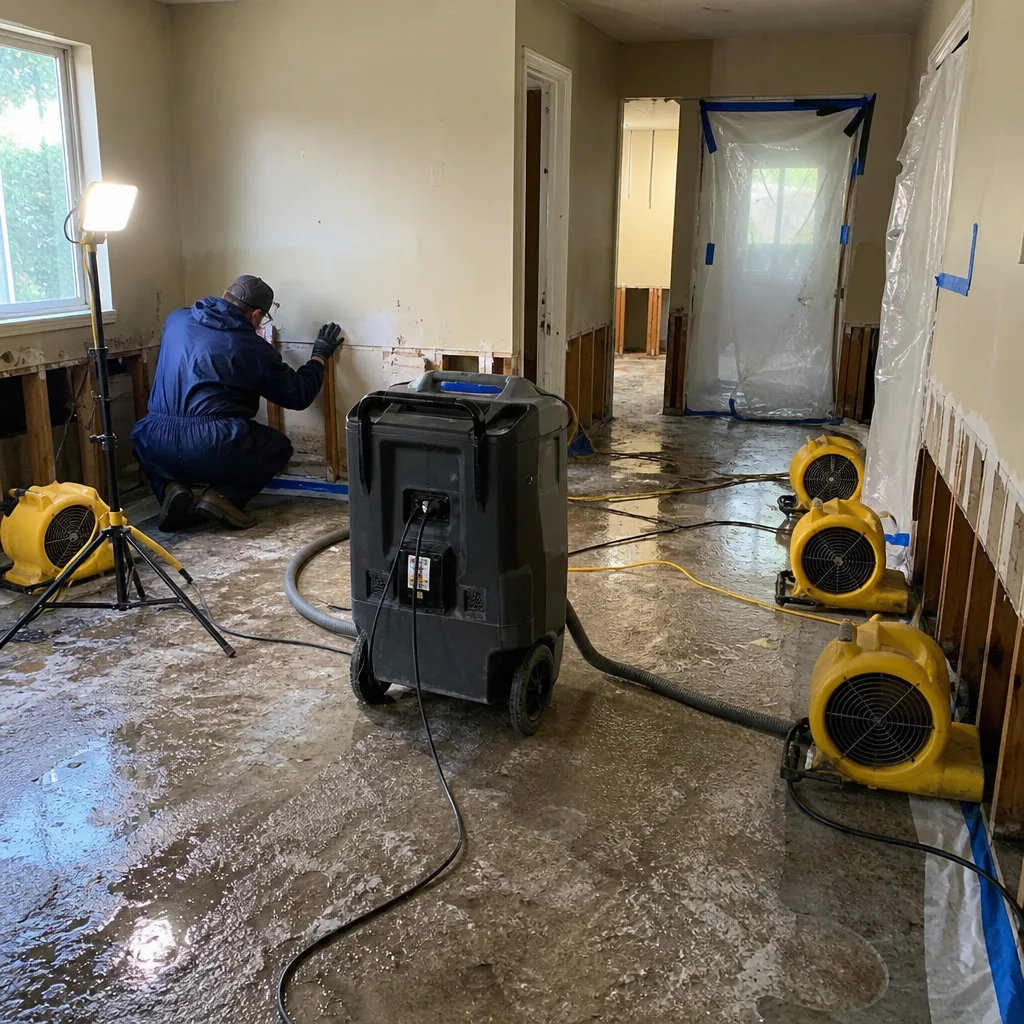
The restoration file is the single most valuable document you can maintain for property value and insurance protection. In our experience, homes with complete restoration files sell faster and at closer to asking price in Boynton Beach’s competitive market. Here’s what belongs inside.
Core Documents: The Non-Negotiable Set
- Original drying logs with daily moisture readings. These show psychrometric data - temperature, RH, specific humidity, and vapor pressure - recorded during active drying. They prove the restoration reached dry standard, not just that equipment ran.
- Moisture maps with probe point locations. A diagram or photo series showing exactly where readings were taken, with material classifications: drywall, plywood subfloor, dimensional lumber, engineered flooring, etc.
- Equipment placement records. Which Dri-Eaz, Phoenix, or Injectidry units were used, serial numbers if available, and placement dates. This documents drying capacity relative to affected area.
- Written scope of work and price. Haven Standard, Clause 1: the price agreed before work started. This prevents scope-creep disputes and establishes the baseline for warranty claims.
- Photo record from every visit. Not just before and after - every visit. Our standard deliverable includes dated, geotagged photos of all affected areas, equipment readings, and material conditions.
- 365-Day Done Right Promise documentation. The signed warranty under The Haven Standard, with claim procedures and contact information.
Supporting Documents: The Value-Add Set
- Insurance claim correspondence. All emails, letters, and adjuster reports related to the original claim. Subsequent claims for the same area will be scrutinized; this proves the timeline.
- Contractor licenses and insurance certificates. For any subcontracted work, the actual certificates, not promises.
- Material safety data sheets for antimicrobial treatments. If applied, these document what was used and that it was appropriate for the material.
- Post-restoration inspection reports. Third-party mold clearance reports, structural engineer letters, or other verification documents.
How the File Protects You at Sale
Florida’s seller disclosure requirements include known water damage and repair history. A complete restoration file transforms a disclosure from a liability into a selling point. Buyer’s inspectors in Boynton Beach increasingly use moisture meters as standard practice. When you can produce the original drying log showing 10.2% MC on the baseplate and your 12-month verification showing 11.8%, you’ve preempted the inspector’s concern. Without that file, the same reading triggers a recommendation for invasive inspection, deal delays, and price renegotiation.
Documenting Your Annual Inspection with Dated Photos
Your own documentation creates a contemporaneous record that insurers cannot easily dispute. The goal is simple: if new damage appears in a previously restored area, prove that the area was sound at your last inspection. Here’s the protocol we teach homeowners in Boynton Beach.
The Annual Photo Set: What to Capture
- Wide room shots from fixed positions. Mark the floor with tape at camera placement points so year-over-year comparison is exact. Include a date board or newspaper in frame - digital timestamps can be altered; physical date references cannot.
- Close-ups of all previously affected surfaces. Each wall section, floor area, and ceiling repair that was part of the original restoration. Use consistent lighting: natural light from the same window, same time of day, or a fixed artificial source.
- Baseboard and trim details. The gaps, caulk lines, and fastener conditions described in the visual inspection section. These change most predictably with moisture.
- HVAC registers and returns in restored rooms. Rust, staining, or discoloration around these indicates duct condensation or envelope leakage.
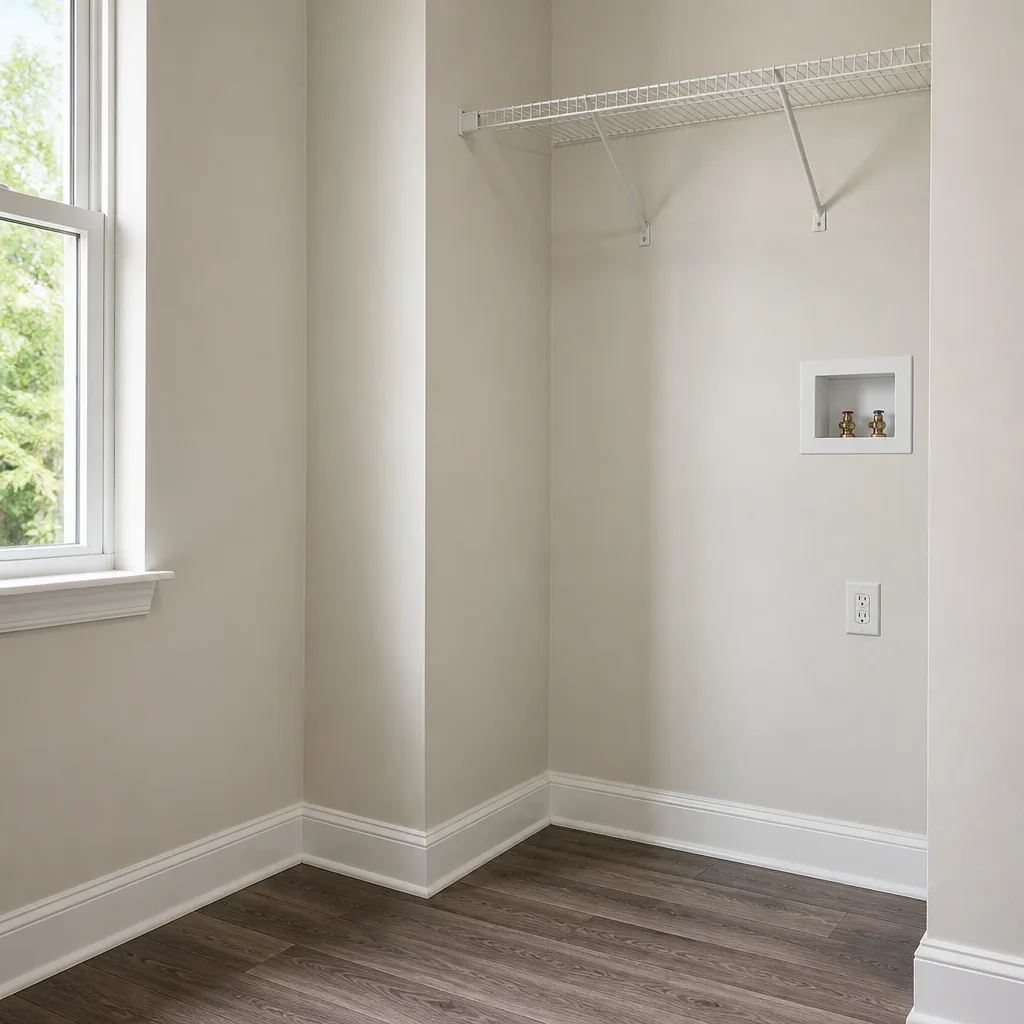
- Any appliances or plumbing fixtures involved in the original loss. Water heater pans, washing machine boxes, ice maker lines - the failure points. Show condition and any corrosion or leakage signs.
- Your moisture meter readings in frame. Photograph the meter display against the surface being measured, with the date reference visible. This documents the reading methodology, not just the number.
Storage and Organization
Store photos in three places: local drive, cloud service, and physical USB in your safe deposit box. Name files systematically: 2025-01-15_MasterBedroom_NorthWall_MC12pct.jpg. The date-first format sorts chronologically and makes retrieval instant.
Pair photos with a one-page annual summary noting: inspection date, weather conditions (outdoor RH and temperature), HVAC filter age, dehumidifier runtime hours, any anomalies found, and any professional consultations scheduled. This summary becomes your narrative if a dispute arises.
Why Boynton Beach’s Climate Changes the Math
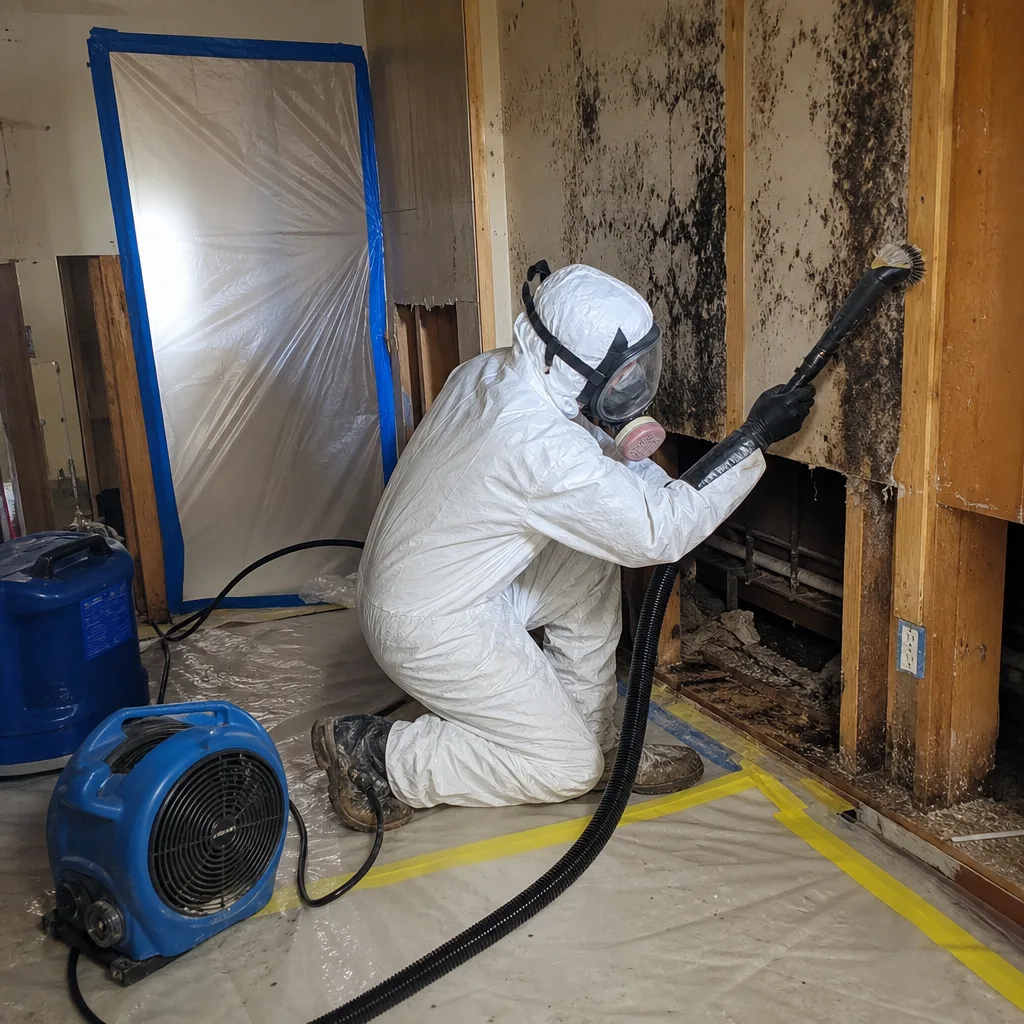
Restoration standards written for national application assume moderate humidity. Boynton Beach operates outside that assumption for eight months of the year. Understanding how local climate affects your maintenance checklist prevents false confidence and missed flags.
The Year-Round Humidity Load
Boynton Beach averages 74% annual relative humidity, with June through October routinely exceeding 80% for extended periods. This means:
- Materials that would air-dry to 12% MC in Arizona stall at 16-18% here without mechanical dehumidification.
- Air conditioning run times are longer, accelerating coil biofilm accumulation and filter loading.
- Even properly restored walls face continuous vapor drive from exterior to interior, especially in older homes with less effective vapor barriers.
The Coastal Salt Factor
Homes east of Federal Highway and near the Intracoastal experience accelerated corrosion of fasteners, HVAC components, and moisture meter contacts. Your annual inspection should include closer examination of metal components in restored areas. What reads as moisture in a pin-type meter can sometimes be conductive salt residue on fastener heads - but that residue itself indicates envelope breach and requires attention.
The Thunderstorm Cycle
Boynton Beach’s afternoon thunderstorm pattern creates rapid humidity spikes: outdoor RH can jump from 65% to 95% in 30 minutes. A home with proper HVAC recovery should return to set point within 2 hours. If your restored room lingers above 60% RH more than 4 hours after storm passage, your system is undersized, your envelope is leaking, or both.
Neighborhood-Specific Considerations
In western Boynton Beach developments like Valencia Cove and The Grove, newer construction with tighter envelopes can trap moisture if ventilation isn’t balanced. In older eastern neighborhoods, porous construction allows more vapor exchange but also more infiltration during storm events. Your maintenance checklist should account for which condition applies: tight homes need dedicated dehumidification, porous homes need envelope maintenance and faster inspection cycles.
Common Mistakes to Avoid
- Relying on smell alone. Musty odor indicates active microbial growth, but absence of odor proves nothing. We have documented elevated moisture in Boynton Beach walls with no detectable odor because the growth was early-stage or behind impermeable finishes.
- Using a single moisture reading. One pinless meter scan at chest height misses baseplate conditions, which are where moisture accumulates in South Florida’s slab-on-grade construction. Always probe at multiple heights and at floor-wall junctions.
- Ignoring the 90-day checkpoint. Homeowners who check at 30 days and again at 12 months miss the wet-season stress window. The 90-day reading in Boynton Beach is where we catch 60% of eventual failures.
- Storing restoration files only with the insurer. Insurance companies merge, policies change, and claim records can be purged after 3-7 years. Your personal file is your only guaranteed record.
- Assuming new construction is immune. Homes built 2015-2020 in Boynton Beach experienced rapid construction during high demand, with documented envelope failures in multiple developments. Age of home does not predict restoration success.
- Waiting for visible mold to act. Visible mold means the problem is 30-60 days advanced. Your checkpoints should catch conditions before mold colonizes, not after.
- Accepting “normal for Florida” as an explanation. Elevated moisture is never normal. It is always a signal of system failure, envelope breach, or incomplete restoration. Any technician who dismisses your readings with this phrase is not performing diagnosis.
When to Call a Professional
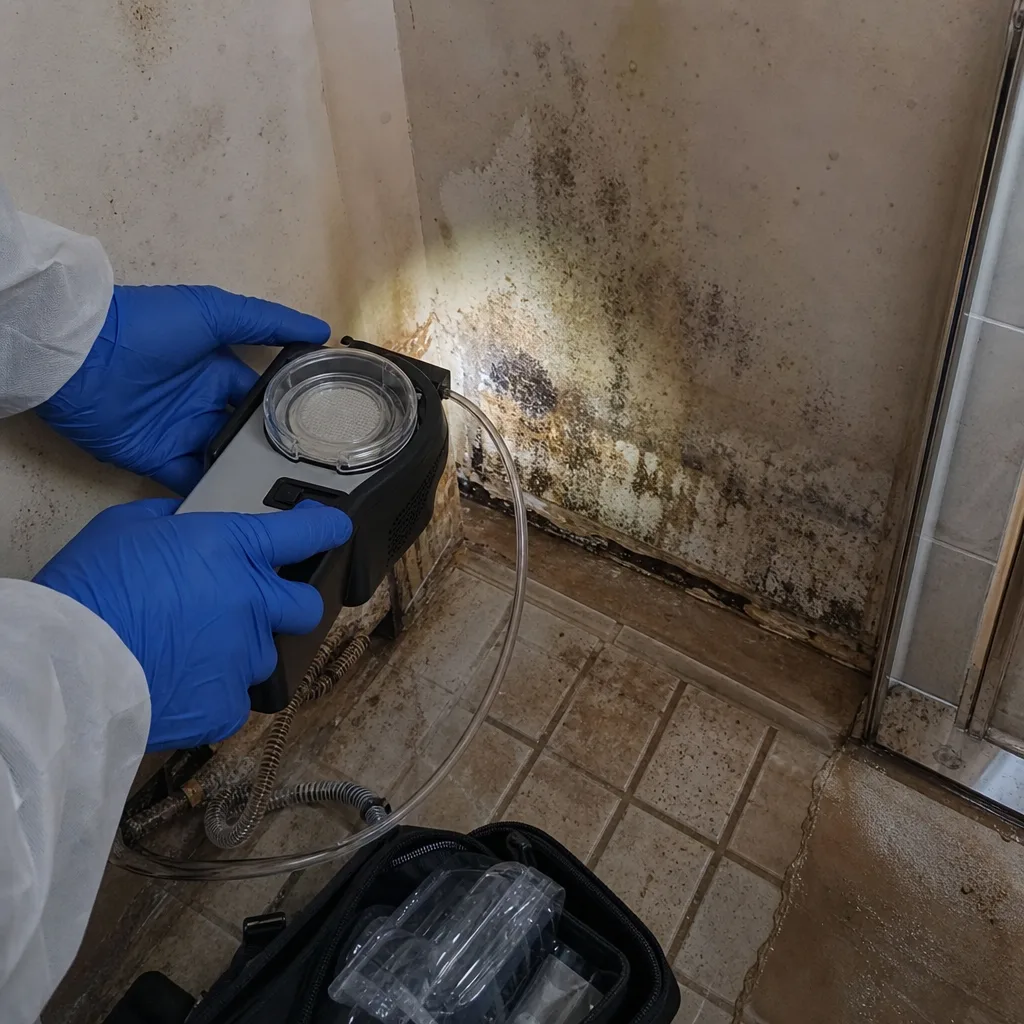
Call for professional moisture mapping if any checkpoint reading exceeds threshold, if two or more visual indicators appear together, or if you discover conditions you cannot explain. Do not attempt destructive investigation yourself - cutting drywall or removing baseboards without containment can spread contamination and void warranties.
Specific scenarios requiring immediate professional assessment: RH above 65% in a restored area with functioning HVAC; wood MC readings increasing between checkpoints rather than stabilizing; any visible mold growth regardless of size; water staining that appears in a previously dry area; or musty odor that persists after 48 hours of dehumidification.
Water Damage Restoration in Boynton Beach from a documentation-first provider ensures that any new intervention is recorded with the same rigor as the original. DryMark Restoration Boynton Beach home offers free estimates in Boynton Beach - call (754) 227-6524. We also provide a Free Second Opinion on any competitor’s written estimate, with no obligation.
Frequently Asked Questions
For Damage Restoration Cost Breakdown: The Boynton Beach Homeowner’s Reference for 2026 readers, professional moisture mapping for a previously restored area typically runs $150-$350 for residential spaces under 1,000 square feet, with full documentation including thermal imaging and written report. This is separate from any remediation work. At DryMark Restoration Boynton Beach, we include 30-day verification as standard on all jobs, and offer standalone annual verification appointments. Call (754) 227-6524 for exact pricing on your specific area - estimates are free.
Insurers accept well-documented homeowner records, but the documentation must be contemporaneous, systematic, and include methodology. A photo of a moisture meter display with a dated newspaper in frame, paired with a written log, carries significantly more weight than verbal assertions. Your original restoration file from the first claim is even more critical - it establishes the pre-loss condition baseline that insurers use to distinguish new damage from pre-existing conditions. Keep both sets of records together.
Boynton Beach’s position on the Atlantic coastal ridge means slightly lower peak temperatures than inland Florida but higher sustained humidity due to onshore flow and the moderating effect of the Gulf Stream. The city also experiences more frequent afternoon thunderstorms than Naples or Fort Myers, creating rapid humidity cycling that stresses building envelopes. Maintenance intervals that suffice in drier microclimates need to be tighter here, particularly for HVAC filter changes and dehumidifier capacity verification.
Consumer pinless meters costing $40-80 are adequate for homeowner monitoring between professional verifications. They read moisture content in a relative range rather than absolute percentages, so you must establish baseline readings on known-dry materials in your own home for comparison. For the 30-90-365 checkpoints, we recommend professional-grade pin-type meters with species correction for wood, which provide absolute moisture content readings comparable to your original drying logs. Many restoration companies, including ours, offer meter rental or will perform the checkpoint reading as a standalone service.
This is unfortunately common with providers who do not document to IICRC standards. Request the records in writing; if they cannot be produced, you have limited documentation for warranty claims or future insurance disputes. For subsequent work, select a provider who delivers daily drying logs, moisture maps, and photo records as standard deliverables, not upsells. At DryMark Restoration Boynton Beach, these documents are included on every job under The Haven Standard, with no exceptions.
In Boynton Beach’s active 2015-2025 housing market, buyers and their inspectors scrutinize water damage history closely. A complete restoration file with drying logs, moisture maps, and annual verification photos transforms a disclosure liability into a documented asset. Sellers with full files report fewer inspection contingencies, faster closing timelines, and reduced price negotiation pressure. The file costs nothing to maintain beyond organization, and can preserve thousands in transaction value.
The Bottom Line
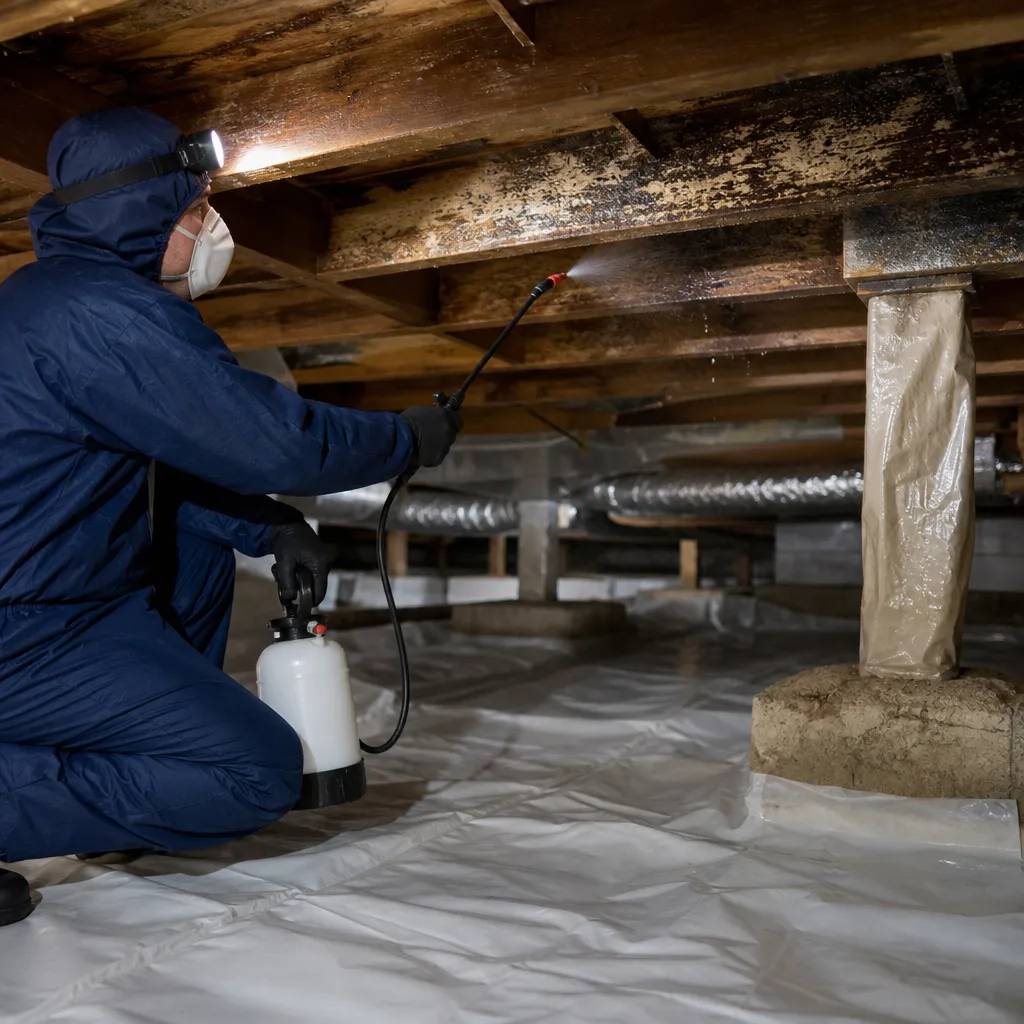
A water damage restoration maintenance checklist for Boynton Beach homeowners is a verification system, not a prevention fantasy. For more guides & resources, explore our blog. The three checkpoints at 30, 90, and 12 months give you measurable proof that your restoration held. Visual inspection skills let you read your walls without destroying them. HVAC and dehumidifier maintenance matched to local humidity loads keeps conditions stable. Your restoration file, with original drying logs and annual photo documentation, protects property value and insures against insurance disputes. The goal is simple: when a buyer’s inspector scans that wall, or a new leak appears nearby, you have evidence that the original work was done right and stayed right. That’s what preserves the investment you made in restoration, and that’s what The Haven Standard was built to deliver.
Written by Alicia Brennan, Owner at DryMark Restoration Boynton Beach, serving Boynton Beach since 2011.