
Last updated September 23, 2026
Free visual inspection and a written scope of work before any mitigation begins - photos, moisture readings, and drying logs go in your claim file
The scope we write is the scope we bill. Anything new gets shown to you, in writing, before we touch it.

 Before
 After
After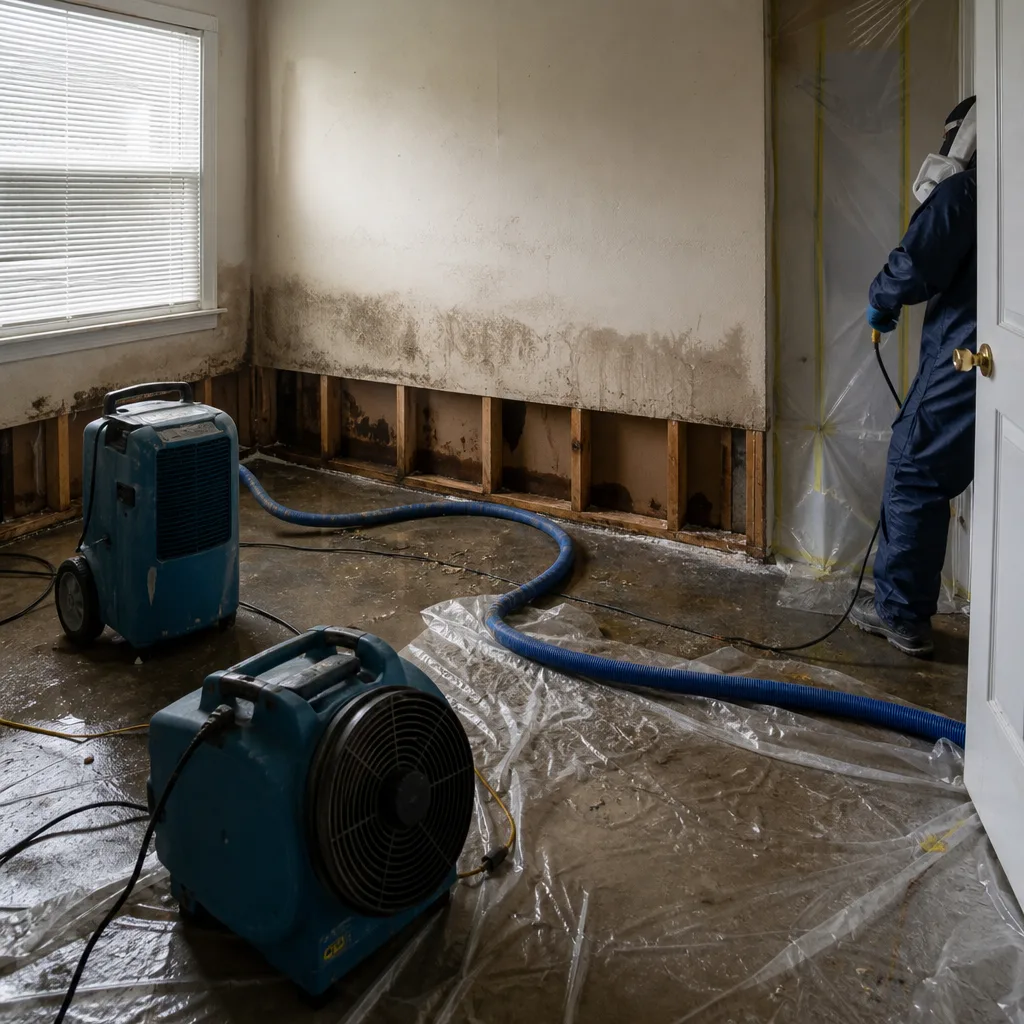 Before
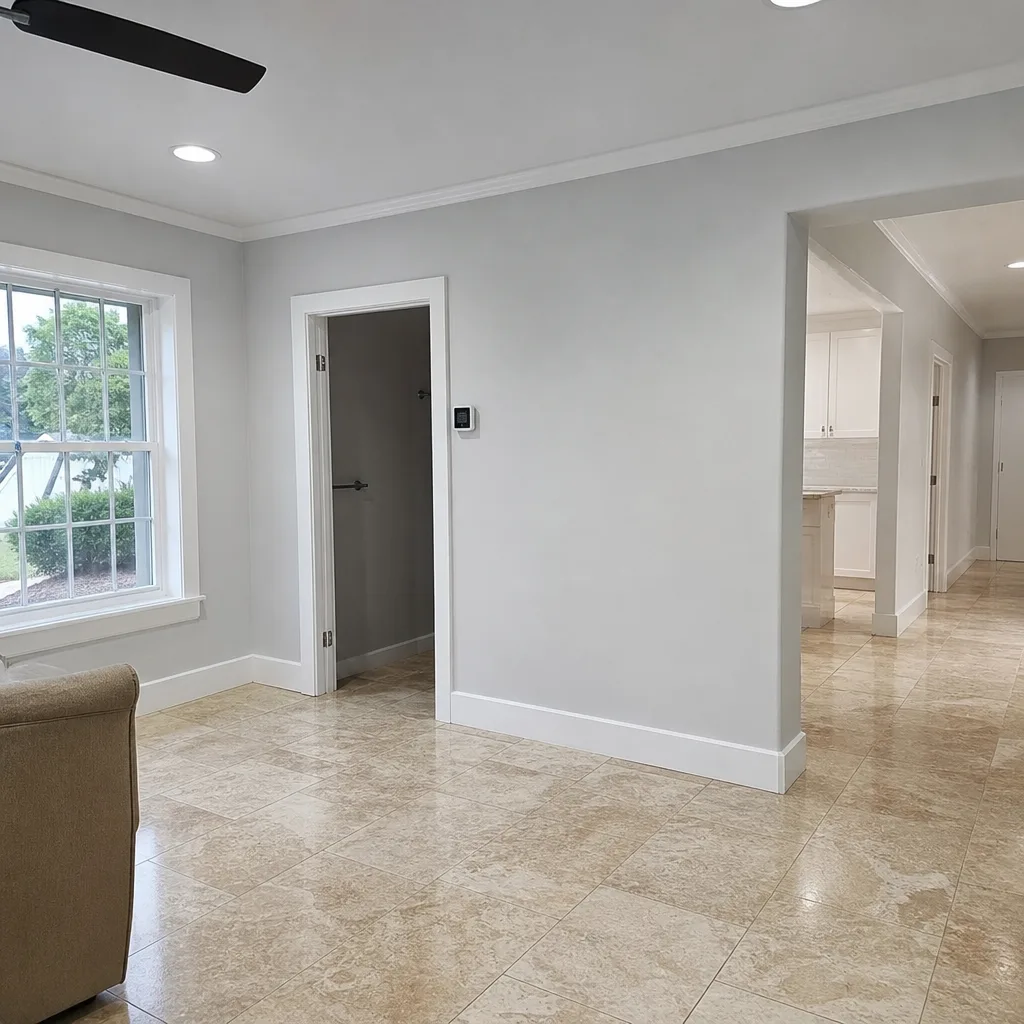 After
After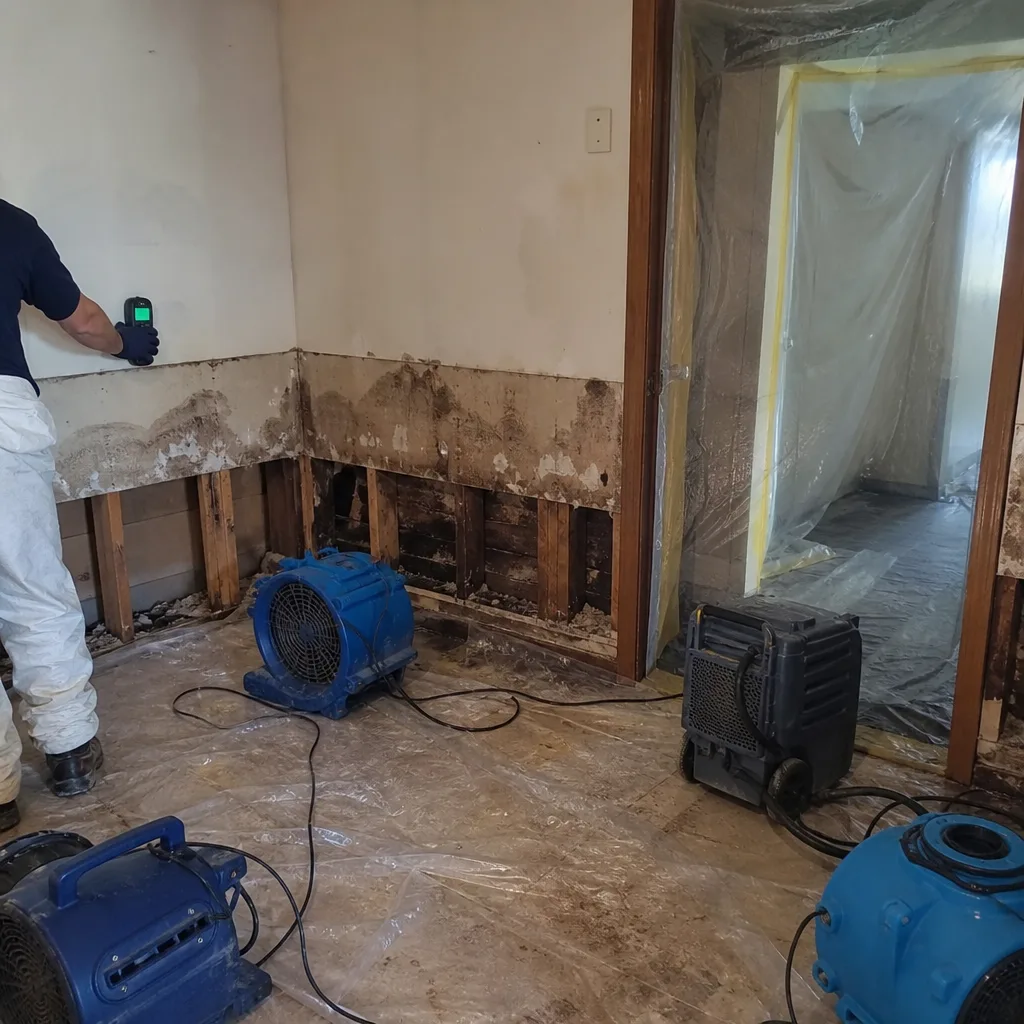 Before
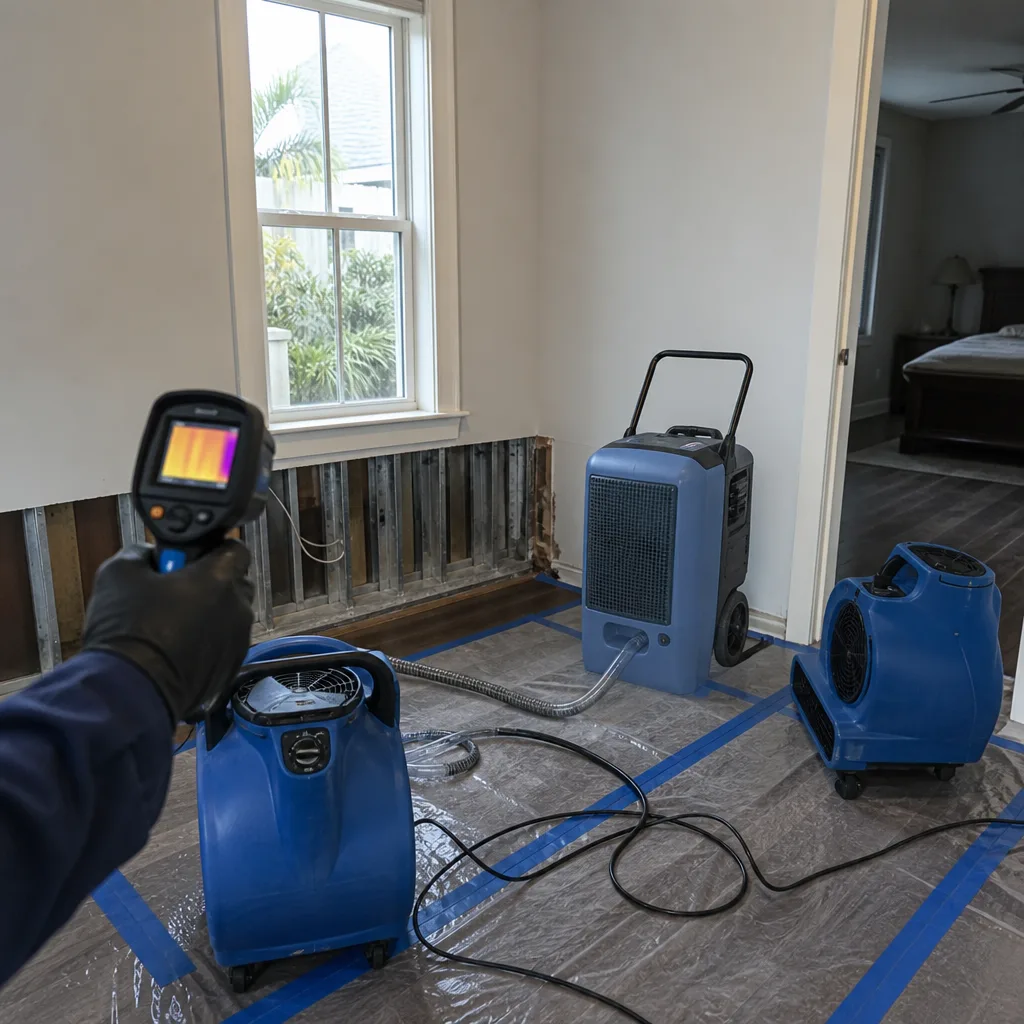 After
AfterDamage Restoration Warning Signs: A Boynton Beach Homeowner’s Reference Guide
A moisture reading of 17% in a restored wood floor framing member looks dry on a visual inspection and feels dry underfoot. It is actively growing mold in the cavity beneath it. In Boynton Beach, where slab-on-grade construction meets a six-month wet season and interior air conditioning runs ten months a year, the warning signs that matter most aren’t dramatic. They’re the readings and visual patterns that a calibrated eye catches at 45 days post-event, when drying appears complete but subsurface moisture hasn’t yet driven visible mold or structural failure. This guide gives you the measurable thresholds, the location-specific patterns, and the documentation standards that separate a finished job from a finished claim.
Quick Answer
The most critical damage restoration warning signs in Boynton Beach homes are measurable moisture content above 16% in wood framing, relative humidity sustained above 60% in previously restored rooms, and paint failure localized to wall bottom plates or window pan flashings. These indicators signal active subsurface moisture even when surfaces appear dry. A $30 hygrometer and a visual inspection focused on South Florida-specific transfer points, slab perimeters, and soffit-to-interior pathways will catch what a casual walkthrough misses - for more on this, see our Seasonal Damage Restoration Care for Boynton Beach: Year-Round Homeowner’s Guide.
Table of Contents
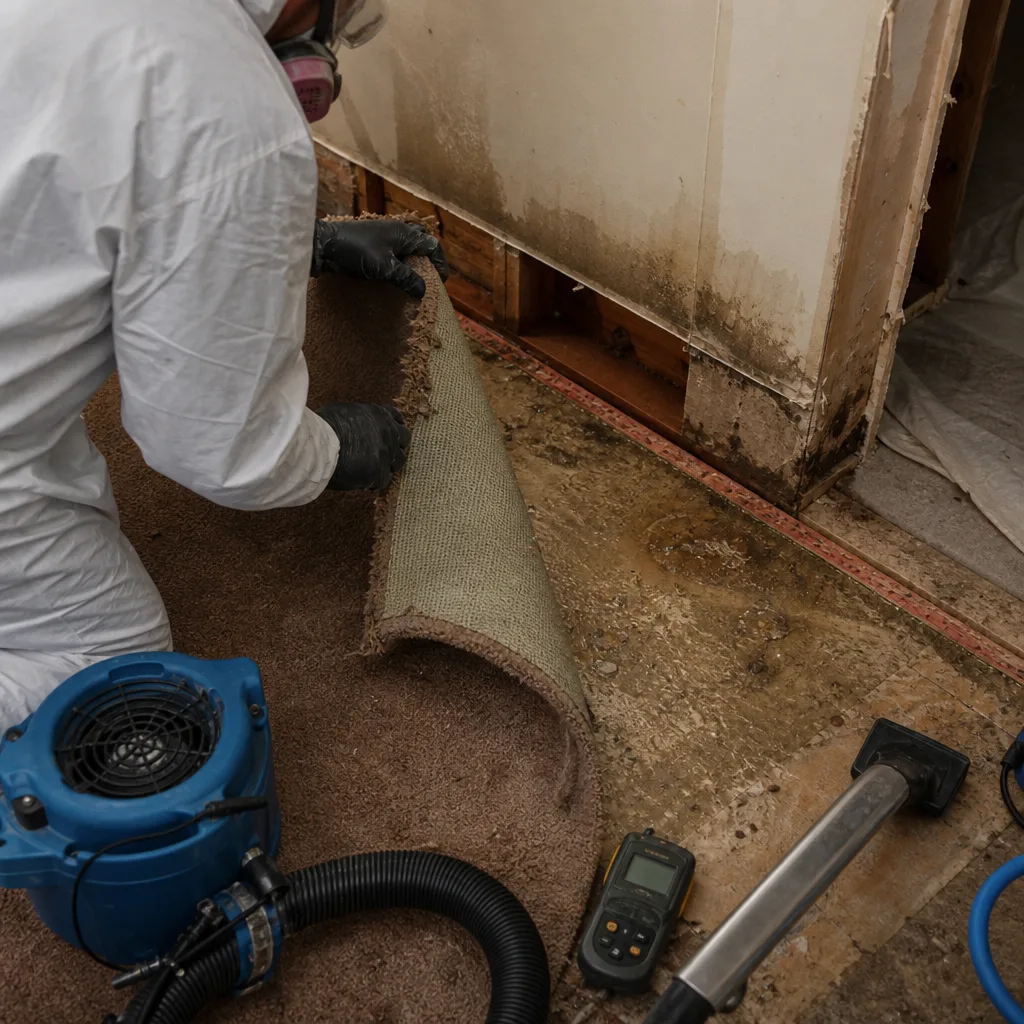
- Material Moisture Thresholds for South Florida
- Five Visual Indicators in Boynton Beach Homes
- How to Take a Room-by-Room RH Baseline
- Cosmetic vs. Moisture-Driven Paint Failure
- What a Mold-Positive Air Sample Actually Means
- The Documentation Gap That Costs Claims
- Common Mistakes to Avoid
- When to Call a Professional
- Frequently Asked Questions
 Before
 After
AfterMaterial Moisture Thresholds for South Florida
Every material in your Boynton Beach home has a moisture content threshold above which microbial growth is not a possibility but a certainty. The difference between South Florida and drier climates is that our baseline humidity loads these materials closer to the edge before any water event occurs.
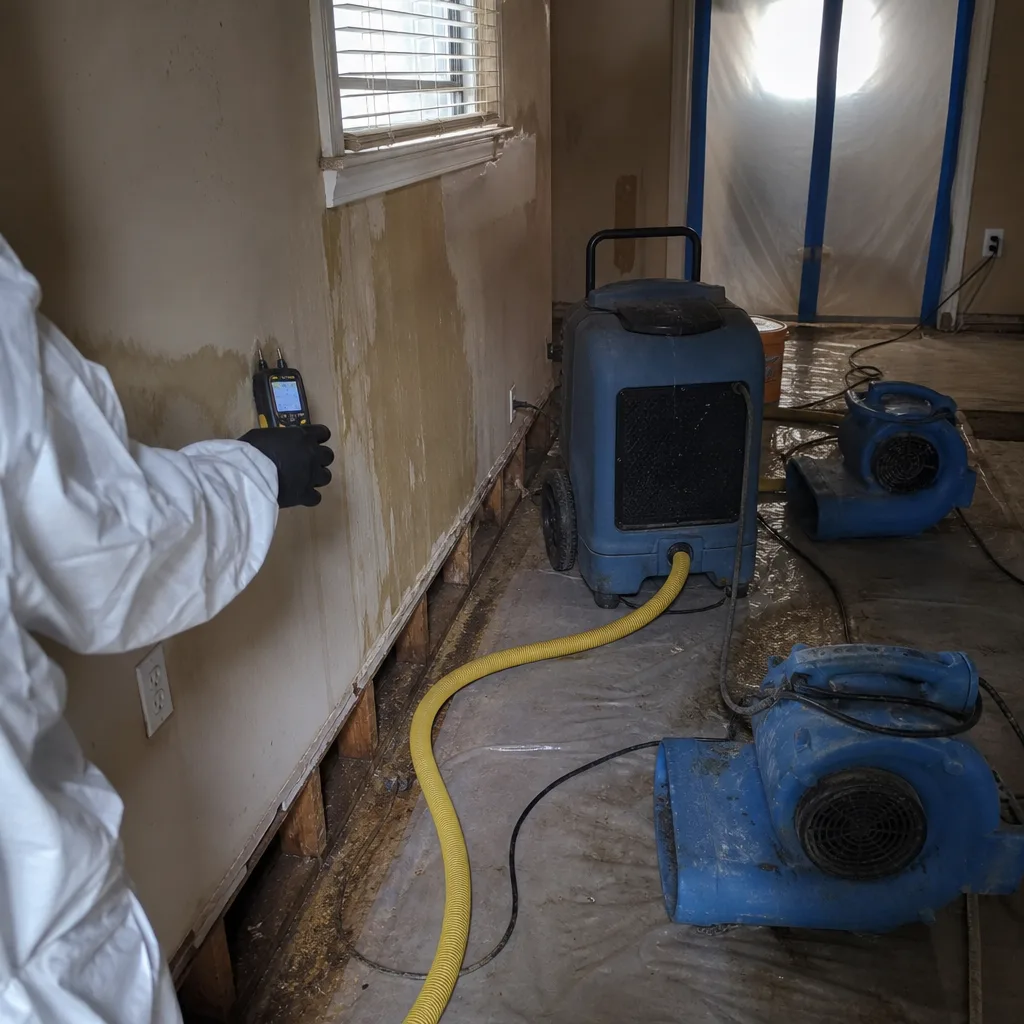
Wood framing members: 16% moisture content is the action threshold. At 16% to 20%, fungal colonization begins within 72 to 96 hours under typical interior conditions. At 20% and above, structural decay organisms activate. We’ve pulled baseboards in Boynton Beach homes where the drywall showed 12% and the pine bottom plate behind it read 19% - a 7-point differential that visual inspection cannot detect. The pin meter reading is what matters. Surface meters can miss this entirely by measuring only the outer 1/16 inch.
Drywall gypsum: The gypsum core is hygroscopic and will wick moisture laterally from a wet bottom edge. A reading above 1% above the material’s equilibrium moisture content for the local climate indicates active wicking. In Boynton Beach, equilibrium for interior drywall typically runs 8% to 10%. Readings of 11% or higher at any point 12 inches or more from a known water source suggest an unidentified moisture reservoir.
Engineered flooring: This is where we see the most expensive misses. Engineered wood and laminate products in Boynton Beach homes often sit directly on concrete slabs with only a thin foam underlayment. The slab surface may read dry, but vapor pressure differential between the cool slab and the conditioned space above drives moisture upward. Engineered flooring cores above 14% moisture content begin delaminating. The surface looks fine. The click-lock edges start cupping microscopically first, then visibly. By the time you see it, the subfloor adhesive or the core itself has failed.
Concrete slab: Relative humidity testing per ASTM F2170 is the standard. In Boynton Beach’s high water table conditions, slab readings above 75% RH at 40% depth require vapor barrier remediation before any flooring installation. We’ve documented slabs in the Chapel Hill and Boynton Lakes areas reading 90% RH in July after a seemingly minor supply line leak - the leak was fixed, but the slab had become a moisture reservoir.
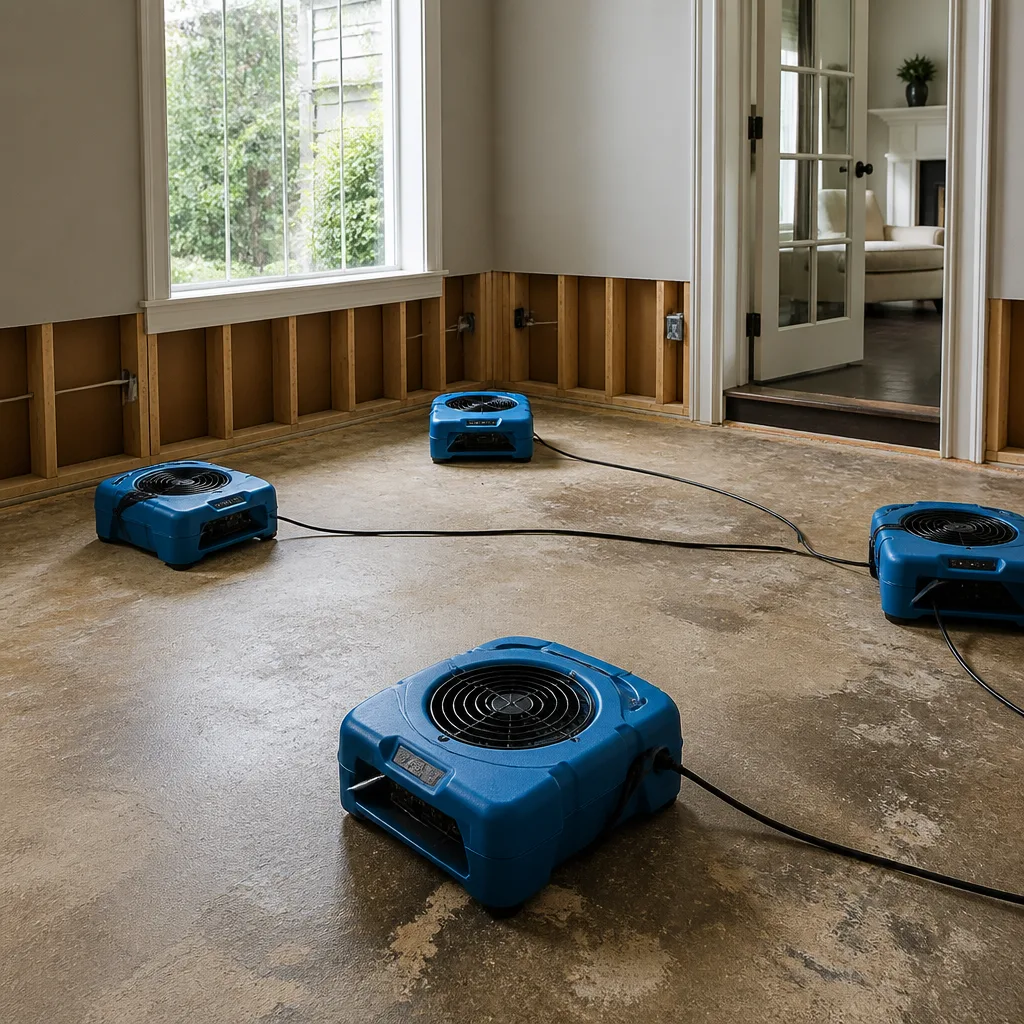
The water damage restoration process we follow documents every reading on a room-by-room drying log, with equipment placement mapped to psychrometric data: temperature, relative humidity, and vapor pressure differential measured with calibrated sensors.
Five Visual Indicators in Boynton Beach Homes
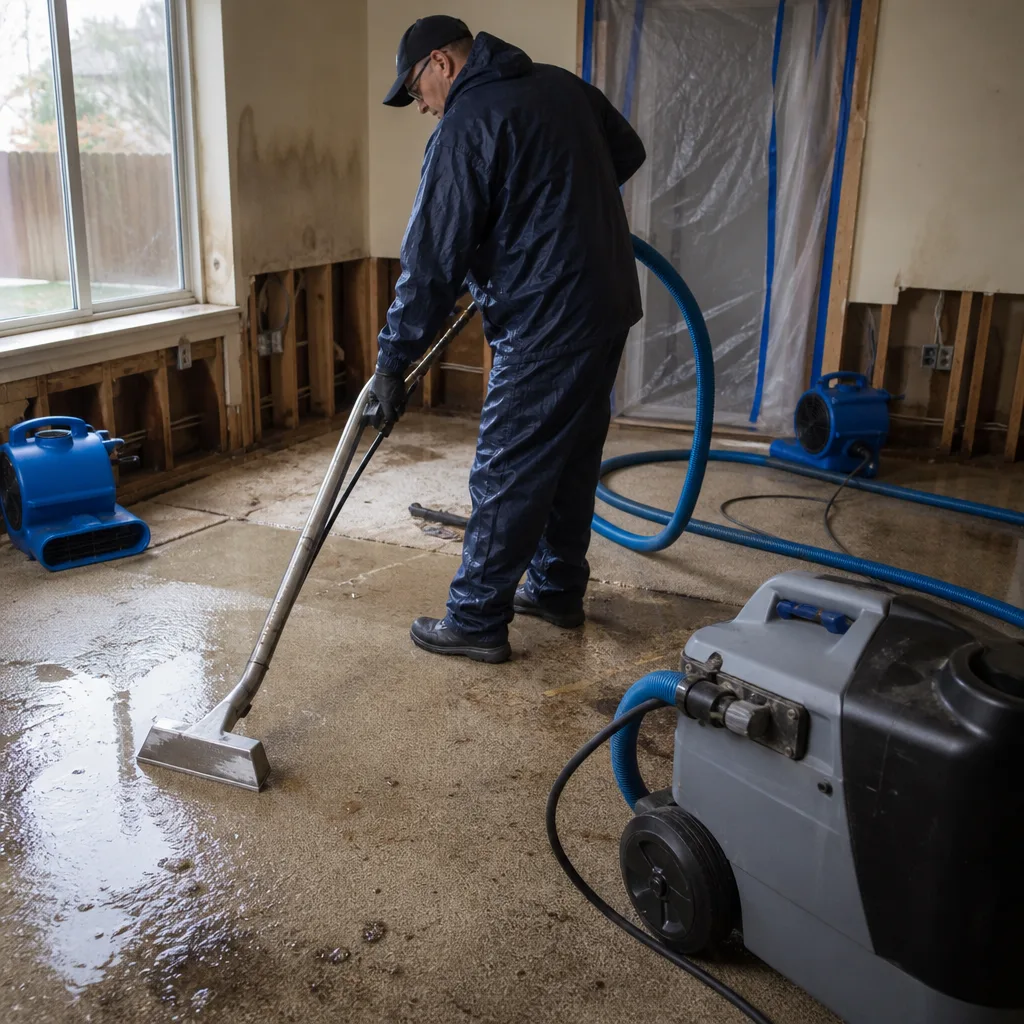
These patterns are specific to our local building stock and climate. They’re not universal water damage signs - they’re the signatures of South Florida construction under South Florida conditions.
1. Slab moisture migration at exterior walls
Boynton Beach’s flat topography and high water table mean slab perimeters are under constant hydrostatic pressure. The visual tell is a darkening or efflorescence on the interior face of exterior walls, typically within 6 inches of the floor. In homes built between 1985 and 2005, we’ve seen this pattern repeatedly in the Pine Tree and Leisureville neighborhoods, where slab preparation standards were less rigorous. The darkening isn’t from a recent leak. It’s from continuous vapor drive through the slab-to-wall joint. A calcium chloride test or in-situ RH probe confirms what the visual pattern suggests.
2. Soffit-to-interior transfer at cathedral ceilings
Many Boynton Beach homes have vaulted or cathedral ceiling assemblies with minimal attic space. When soffit ventilation is compromised by wasp nests, paint buildup, or improper vent strip installation, humid exterior air enters the roof assembly and condenses on the interior surface of the roof deck. The visual indicator is a rectangular or strip-shaped discoloration on the ceiling drywall, aligned with rafter bays, often mistaken for roof leaks. The key distinction: roof leaks show random patterns and often include nail pop staining. Soffit transfer shows regular, bay-aligned patterns and no nail pops. Thermal imaging reveals the cooler rafter bays where air is moving.
3. Window-frame condensation patterns
Impact-rated windows in Boynton Beach homes create a thermal bridge at the frame. When interior air conditioning meets exterior humidity, condensation forms on the aluminum frame interior surface. The critical visual is not the condensation itself but the staining pattern below it: vertical streaks on the drywall extending 2 to 4 inches down from the window stool, with a faint brown or gray cast. This indicates repeated wet-dry cycling that has deposited dissolved minerals or begun fungal colonization. We’ve documented this in homes across the Quantum Park and Cresthaven areas, particularly on north-facing elevations where frames stay cooler longer.
4. Baseboard separation at interior partitions
When a water event affects only one side of an interior wall, the wet side swells and the dry side doesn’t. The result is baseboard pulling away from the wall on the dry side, creating a gap that looks like poor installation. In Boynton Beach’s concrete block construction, this is especially common at walls between water-damaged carpeted rooms and tile-floored rooms. The tile side stays dry, the carpet side wicks into the bottom plate, and the baseboard on the tile side loosens as the block behind it expands microscopically. The warning sign is the asymmetry: baseboard tight on one side, gapped on the other.
5. HVAC register staining with defined geometry
Supply registers in high-humidity zones produce condensation on the diffuser face and the surrounding ceiling. The visual indicator that signals a moisture problem rather than normal operation is a rectangular stain on the ceiling, precisely matching the register footprint, with a darker perimeter and lighter center. This pattern indicates that the register box in the attic or ceiling plenum is uninsulated or poorly sealed, and attic air is migrating around the diffuser. In Boynton Beach’s cooling-dominated climate, this runs continuously from March through November. The moisture load is small per day but cumulative, and the location above living space makes it invisible until the ceiling material fails.
How to Take a Room-by-Room RH Baseline
A $30 digital hygrometer, placed correctly and read consistently, gives you more actionable information than most insurance adjusters collect on initial inspection. Here’s how to establish and use a baseline in your Boynton Beach home; find more guides & resources on our blog.
- Buy two identical units. Place them side by side for 24 hours. If they read more than 3% RH apart, return the outlier. Calibration drift is common in consumer units.
- Place at breathing height, 3 feet from exterior walls, 6 feet from HVAC registers. Wall and register zones have localized conditions that don’t represent the room’s bulk air.
- Record morning (7 AM) and evening (7 PM) readings for 14 days before any water event. This establishes your home’s normal range. In Boynton Beach, we typically see 45% to 55% RH in conditioned spaces during normal operation.
- After any restoration work, continue the same schedule for 45 days. This is the critical window. Sustained readings above 60% RH in a previously wet room indicate incomplete drying regardless of what the contractor reported.
- Compare restored rooms to unaffected rooms on the same day. A 10-point differential between a restored bedroom and an unaffected bedroom on the same HVAC zone means the restored room has a moisture source the drying process didn’t address.
What the numbers mean in practice:
- 55% to 60% RH: Elevated. Not an emergency, but monitor for 7 days. If trending upward, schedule a moisture survey.
- 60% to 65% RH: Action threshold. Fungal spores present in all air will begin germinating on suitable surfaces. This is when we deploy dehumidification with Phoenix or Dri-Eaz LGR units and hunt the moisture source.
- Above 65% RH: Active problem. Visible mold growth likely within 14 days on organic surfaces. Professional intervention required.
The hygrometer won’t tell you where the moisture is. It tells you whether your restoration was complete. That’s a different and more valuable question.
Cosmetic vs. Moisture-Driven Paint Failure
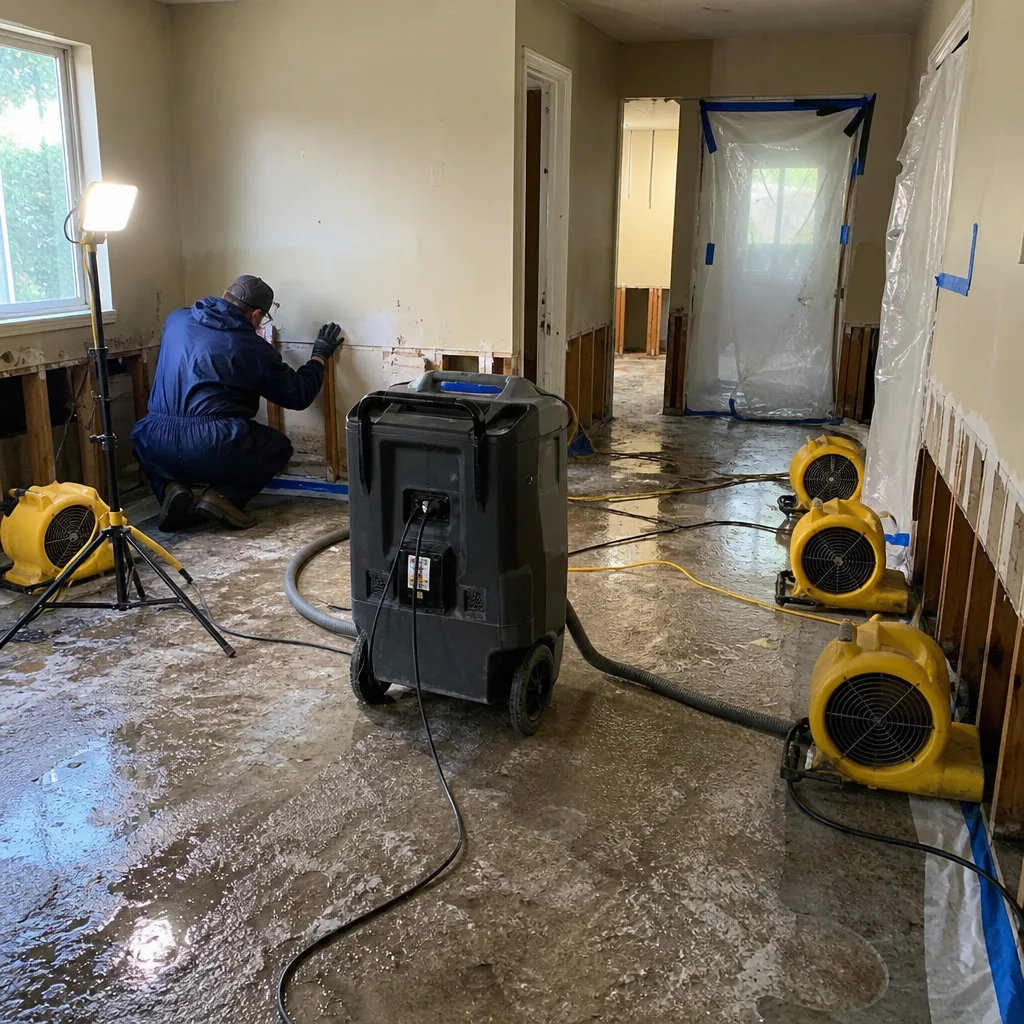
Not all peeling paint is a moisture signal. In Boynton Beach’s UV environment, cosmetic failure is common and normal. The distinction matters because unnecessary moisture remediation is expensive, and missed moisture remediation is more expensive.
Cosmetic paint failure: Random distribution, often on south and west elevations, starting at the paint surface and working inward. The back of the peeled flake shows clean paint layers. No staining on the substrate. Common on exterior walls with direct sun exposure, especially in homes built before 2000 with oil-based primer under latex topcoat.
Moisture-driven paint failure: Localized to specific architectural features. The critical locations are wall bottom plates (peeling 2 to 6 inches above floor level), window pan flashings (peeling below the sill or at the jamb corners), and ceiling areas within 24 inches of exterior walls. The back of the peeled flake shows muddy or stained substrate. The peel pattern is sheet-like rather than flaky, and the underlying drywall or plaster feels cooler than surrounding areas to the back of your hand.
The specific tell is location relative to moisture pathways. In Boynton Beach’s concrete block construction, bottom plate peeling on interior walls signals slab moisture migration. Pan flashing peeling on windows signals failed or missing sill pan membrane, common in installations from the 1990s and early 2000s. Ceiling perimeter peeling signals roof assembly or soffit transfer issues.
We’ve documented cases in the Hunters Run and Cypress Creek communities where homeowners repainted three times over 18 months before identifying the actual moisture source. The paint was a symptom. The slab or the window pan was the disease. A $12 moisture meter at the base of the wall would have redirected the effort months earlier.
What a Mold-Positive Air Sample Actually Means
Mold air sampling is widely misunderstood by homeowners and, frankly, by many remediation contractors. A positive result is not automatically a remediation trigger. An incomplete assessment with a positive result is worse than no assessment at all.
Here’s what the data means in a restoration file. Air sampling compares indoor spore counts to outdoor counts, with species differentiation. In Boynton Beach, our outdoor baseline includes elevated Cladosporium and Aspergillus for much of the year due to vegetation density and humidity. An indoor sample showing 800 spores per cubic meter of Cladosporium against an outdoor sample of 1,200 is not a problem. An indoor sample showing 200 spores of Stachybotrys with no outdoor detection is a problem, but only if a moisture source is identified.
The critical principle: mold is a symptom of moisture. A mold-positive air sample without a corresponding moisture source identified is an incomplete assessment, not a remediation authorization. We’ve reviewed competitor files where remediation began on air sample results alone, with no moisture mapping, no thermal imaging, and no documented drying log. The mold returned because the moisture remained.
Our protocol, documented to IICRC S520 and RIA standards, requires three elements before remediation is scoped: confirmed moisture source, documented moisture readings above material thresholds, and air or surface sample results showing elevated indoor counts of water-damage-indicator species. The mold remediation process then includes source elimination, containment, removal, cleaning, and post-remediation verification with new sampling.
A single air sample, positive or negative, without this context is a snapshot without a story. It cannot guide remediation scope or pricing under Haven Standard, Clause 1.
The Documentation Gap That Costs Claims
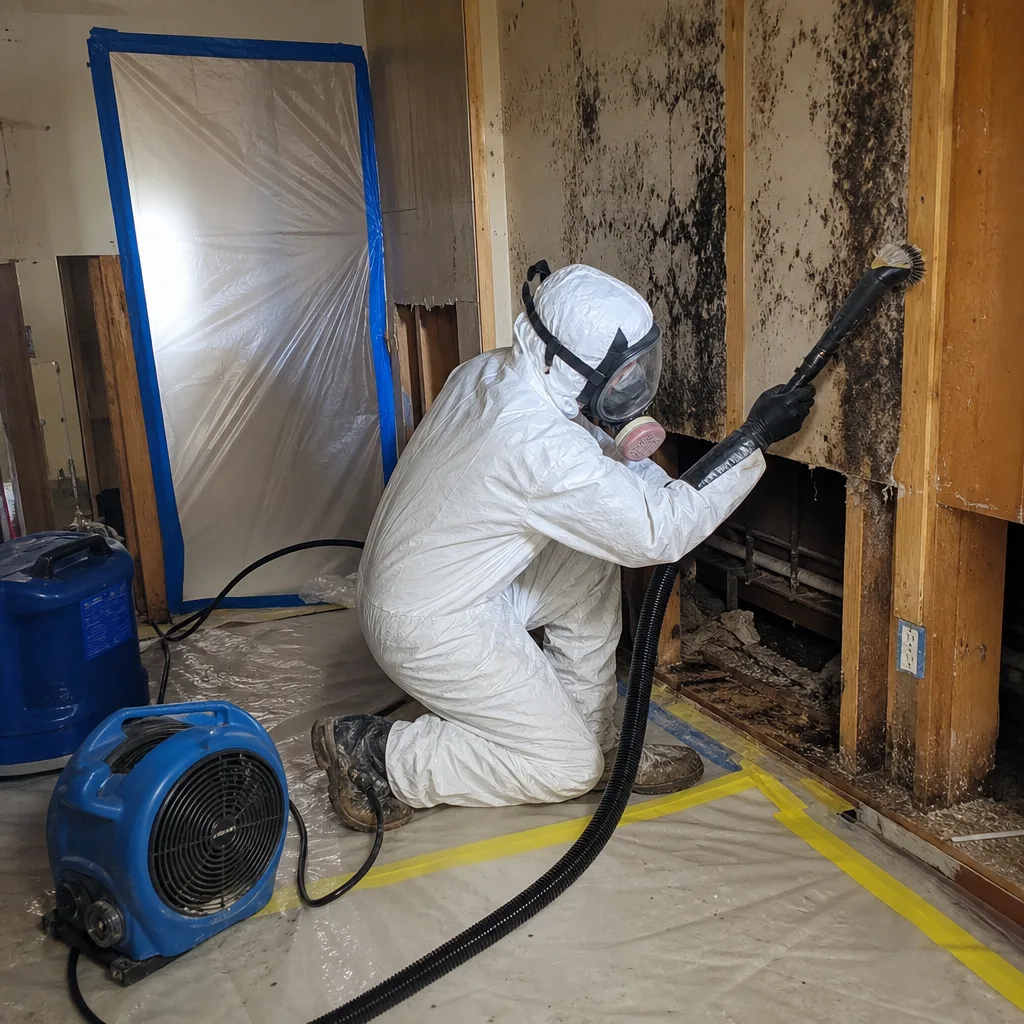
Back to Dry Restoration was founded in 2011 by a former claims adjuster who built the company around a specific problem: the documentation gap that costs homeowners their insurance coverage. The gap is the space between what a contractor says was done and what can be proven to an adjuster’s standard.
Here’s what that gap looks like in practice. A water damage restoration company deploys equipment, runs it for three days, and declares the job complete. The homeowner pays the deductible. Six months later, mold appears. The insurance carrier denies the mold claim because the restoration file contains no daily moisture logs, no photo documentation of equipment placement, and no written scope signed before work began. The carrier’s position: the mold is a new event, not a continuation of the old one. The homeowner has no evidence to dispute this.
We’ve restored over 12,000 homes since 2011. Every job has a written price before work starts - Haven Standard, Clause 1 - and a documented photo record on every visit. Our drying logs record psychrometric data at 24-hour intervals: temperature, relative humidity, and specific humidity at multiple points in the affected area. Equipment is mapped to room plans. Moisture readings are taken with calibrated pin meters and documented by location.
This documentation turns a restoration invoice into a claim an insurer pays without a fight. More importantly, it gives the homeowner evidence if secondary damage appears. A photo of a drywall cavity reading 14% on day three, with equipment placement documented, proves the drying was complete at completion. Without that photo, the contractor’s verbal assurance is worth nothing in a coverage dispute.
The fire and smoke damage restoration process requires similar documentation rigor, with pre-cleaning photo inventory, room-by-room scope sheets, and chain-of-custody documentation for contents.
Common Mistakes to Avoid
- Trusting surface feel over meter readings. Drywall can feel dry at 15% moisture content and be actively wicking from a wet stud cavity. The hand is not a moisture meter.
- Assuming “certified” means documented. IICRC certification indicates training, not practice. Ask for a sample drying log from a recent job. If the contractor cannot produce one, the certification is a wall decoration.
- Ignoring the 45-day window. Most secondary mold damage in Boynton Beach homes appears 30 to 60 days after initial restoration, when the contractor is gone and the homeowner assumes the problem is solved. Schedule your own hygrometer monitoring during this period.
- Confusing equipment rental with professional drying. A homeowner with a Big Blue fan from the hardware store is moving air, not drying structure. Psychrometric control requires LGR dehumidification, air filtration, and monitored heat application - the XPOWER and B-Air systems we deploy are selected for the specific vapor pressure differential of the affected space.
- Accepting verbal scope changes. Haven Standard, Clause 1 requires a written price before work begins. Any contractor who adds work without a written amendment is creating the documentation gap that costs claims. This is especially common in Boynton Beach home restoration where mold is discovered mid-drying.
- Neglecting to document pre-existing conditions. Photos of the loss area before any work begins protect both homeowner and contractor. We photograph every room from four angles before equipment enters, with timestamps. Adjusters compare these to post-restoration photos. Without them, disputes about what damage was caused by the event versus pre-existing are unresolvable.
When to Call a Professional
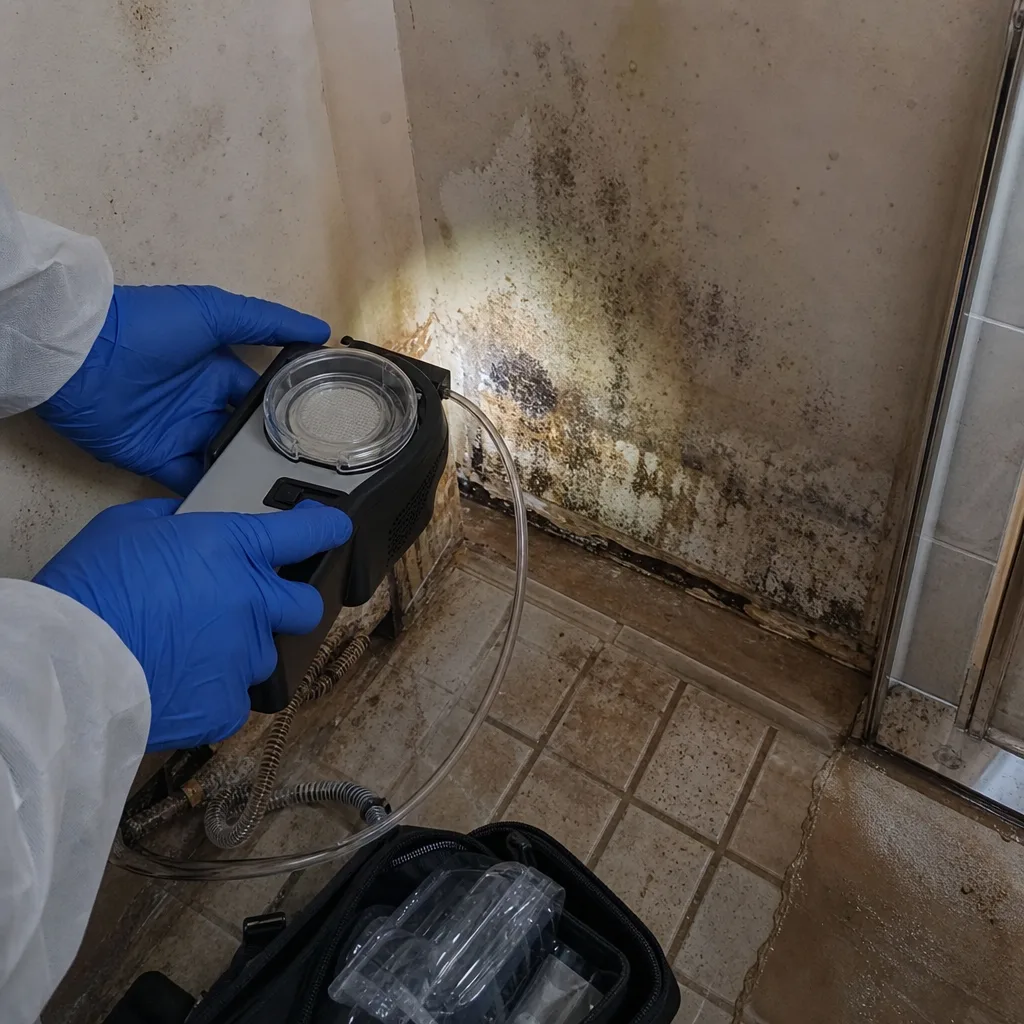
Call for a professional moisture survey when your hygrometer shows sustained readings above 60% RH in any previously restored room, when you observe paint failure localized to bottom plates or window flashings, or when any pin meter reading in wood framing exceeds 16% regardless of surface appearance - our How to Hire a Damage Restoration Contractor in Boynton Beach: A Step-by-Step Guide can help you choose wisely. These are not emergency thresholds, but they are action thresholds - the window between action and emergency in Boynton Beach’s climate is typically 10 to 14 days.
For active water intrusion - supply line breaks, roof leaks during rain, sewage backup - the response is immediate. Live phone coverage is available 24 hours a day, 7 days a week with no voicemail on emergency lines. Every job is quoted in writing before work begins, documented with a photo record on every visit, and covered by the 365-Day Done Right Promise.
DryMark Restoration Boynton Beach offers free estimates in Boynton Beach. Call (754) 227-6524. A Free Second Opinion on any competitor’s written estimate is available at no charge - bring their scope and we’ll review the documentation standard, the equipment specification, and the pricing logic.
Frequently Asked Questions
A thorough moisture survey with thermal imaging, pin and non-invasive meter readings, and documented findings typically ranges from $250 to $450 in the Boynton Beach market. DryMark Restoration Boynton Beach applies this fee toward any restoration work we perform. Call (754) 227-6524 to schedule - estimates are free, and the survey fee is disclosed before any assessment begins.
Coverage depends on documentation. If the original restoration file contains daily moisture logs, photo-documented equipment placement, and a written completion scope, the carrier is more likely to treat secondary damage as continuation of the original loss. Without that documentation, the carrier will likely classify it as a new event with a new deductible. This is why Haven Standard documentation exists - it protects your coverage. We coordinate directly with adjusters and provide photo-documented assessments for claim files.
Live person answers every call, 24 hours a day, 7 days a week - no voicemail trees, no next-business-day callbacks while water is still moving. Emergency dispatch for active water intrusion in Boynton Beach typically arrives within 90 minutes. The first action is stopping the source, then a written scope and price before extraction or demolition begins.
Surface cleaning of visible mold without addressing the moisture source and verifying airborne spore levels is incomplete and often makes the problem worse by disturbing spore reservoirs. IICRC S520 defines remediation as source removal, not surface treatment. In Boynton Beach’s humidity, unremediated moisture behind a cleaned surface produces new mold growth within 14 to 30 days. Professional remediation includes containment, negative air pressure, HEPA filtration, and post-remediation verification sampling.
Professional pin meters like the Protimeter Surveymaster or Delmhorst BD-2100 read at multiple depths and are calibrated annually against known standards. Consumer meters typically read only surface moisture and have unknown calibration status. The critical difference is depth penetration - a professional meter with insulated pins reads at 5/8 inch and 1 inch, catching moisture in the stud cavity that a surface meter misses entirely. We use calibrated professional-grade equipment and document calibration dates in every file.
Boynton Beach’s combination of flat topography, high water table (often 3 to 5 feet in coastal zones), and extensive 1980s-2000s slab-on-grade construction creates ideal conditions for hydrostatic pressure against slab undersides. The city’s position on the Atlantic Coastal Ridge means less natural drainage than areas to the west. Neighborhoods like Chapel Hill, Leisureville, and portions of Quantum Park were built during periods when vapor barrier standards were less stringent than current Florida Building Code requirements. The result is a higher incidence of slab moisture migration than in comparable markets to the north or inland.
The Bottom Line
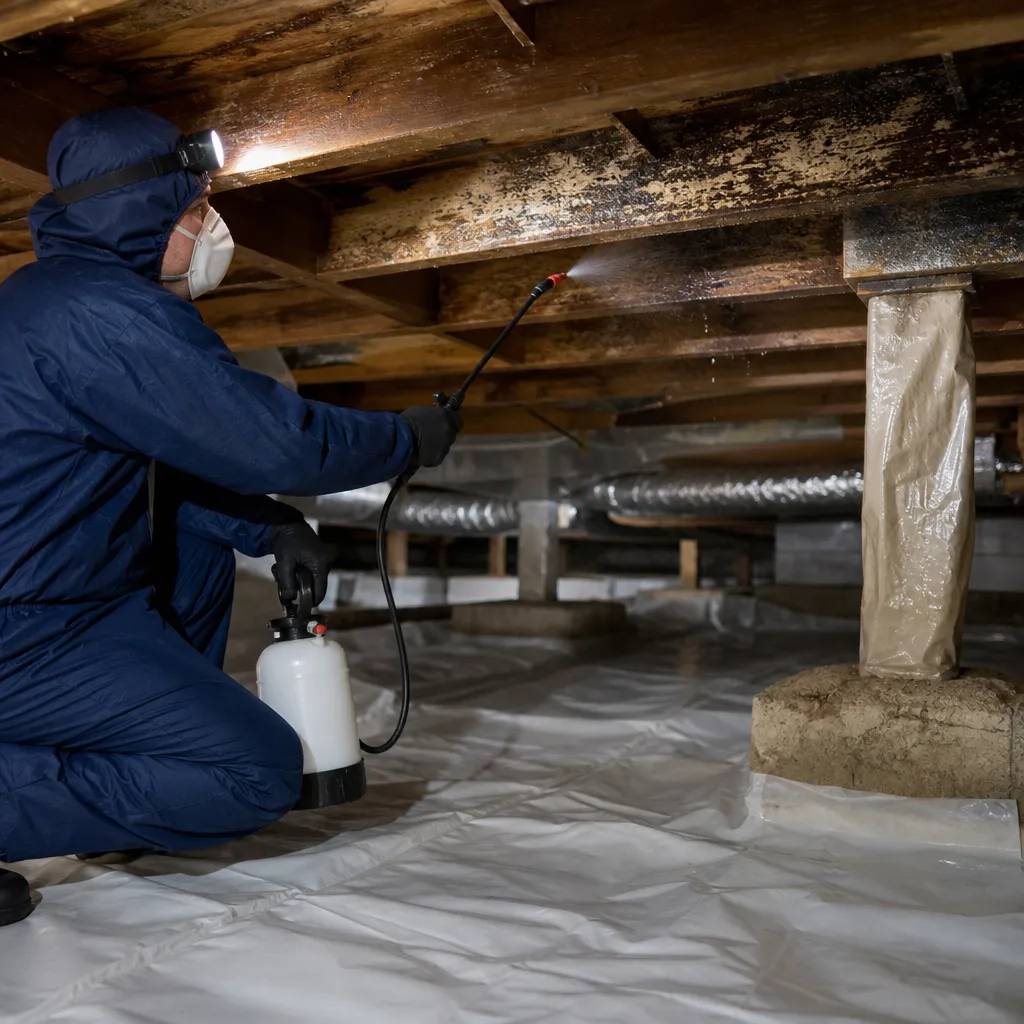
The warning signs that protect your Boynton Beach home are measurable, not mysterious. A 16% moisture threshold in wood, a 60% RH ceiling in conditioned air, paint failure at specific architectural locations - these are the signals that precede visible damage. The $30 hygrometer and a basic pin meter give you more diagnostic power than most homeowners realize. The documentation standard you demand from any restoration contractor - written price before work, daily drying logs, photo records - determines whether your insurance coverage survives a secondary damage event. In a climate that never really dries out, the numbers are your early warning system.
Written by Alicia Brennan, Owner at DryMark Restoration Boynton Beach, serving Boynton Beach since 2011.